Table of Contents
I begin this essay far away in time and topic from the focus of this volume. I do so because it is essential to understand the importance of animals to the human mind and consequently its expressions in arts, myths, rituals, symbolism, religions, literature, and the rest of the components of culture. As we shall learn, our lifeways—particularly our economic relationships—with animals determine our ways of seeing animals. Our ways of seeing animals have, in turn, much to do with our worldview, which includes views of nature, the supernatural/divine, and—it must be emphasized—ourselves in it all.
For the longest part of our existence as hominid animals, we had one kind of relationship with animals and then rather recently in evolutionary time we shifted to domestication and quite another kind of relationship. With the rise of the civilizations of antiquity, this ‘new’ relationship was already several thousand years old and becoming settled; nevertheless those civilizations were still struggling with the heavy baggage of the much older relationship. Much of the culture of the formative stages of these civilizations reflects this struggle. Thus, if we are to more fully understand the role of animals (and the emerging agrarian worldview) in antiquity, we must first stray from the theme at hand.
Movers of the Mind
Animals are more important than we think. Animals are—to use computer-era metaphor—hardwired into the basic circuits of our minds. Throughout the 5 to 10 million years of our hominid evolution we have lived among animals—noisy, lively, eating, drinking, sleeping, shivering, fighting, playing, copulating, urinating, defecating, bleeding, dying Others who fascinated us and provoked thought. Somewhat like us yet somewhat different, animals forced comparisons, categories, and conclusions. Animals moved our minds even as our minds were evolving. And they are still alive, well, and kicking at the deepest levels of our minds today.
Unfortunately, too few fully understand this. The late biologist Paul Shepard explained it best in Thinking Animals: Animals and the Development of Human Intelligence. ‘[T]here is a profound, inescapable need for animals that is in all people everywhere,’ he wrote; as shapers of the human mind and thought, there is ‘no substitute’ for them. This need for animals, Shepard says,
is no vague, romantic, or intangible yearning, no simple sop to our loneliness or nostalgia for Paradise. It is as hard and unavoidable as the compounds of our inner chemistry. It is universal but poorly recognized. It is the peculiar way that animals are used in the growth and development of the human person, in those most priceless qualities, which we lump together as ‘mind.’ It is the role of animal images and form in the shaping of personality, identity, and social consciousness. Animals are among the first inhabitants of the mind’s eye. They are basic to the development of speech and thought. Because of their part in the growth of consciousness, they are inseparable from the series of event in each human life, indispensable to our becoming human in the fullest sense.
Our prevailing worldview may block our understanding of this. We are too used to thinking of animals as important only in the economic sense—for food, materials, work, and, lately, as tools for finding cures for diseases. And human superiority, we think, gives us these entitlements over ‘lower’ animals. Ironically, we can hardly think about their importance to the very capacities—mind, speech and intelligence—on which we base our claims of superiority.
Imprinting a Full Deck
What evolved in humans, Paul Shepard says, ‘was not intelligence, but a development process.’ Genetics sets down the equipment—the brain, nervous system, and other organs—but it does not complete the process. Take vision, for example. Put a patch over the eye of a newborn animal and it cannot, in the absence of light, develop those final nerve connections and it remains blind even after the patch is removed. Similarly, the human brain needs animal types to help it make the connections that put the mind—and the external world—in order. Animal types are, Shepard says, ‘a necessary ingredient, like light shining on the eye of the newborn.’
Second, in producing the human brain, natural selection did not turn out an organ ‘that could assimilate an infinitely complex world like a stomach digesting meat.’ Instead, natural selection produce a linking device, one that takes ‘advice’ on types, categories, and the order of things from the types, categories, and order of things in the living world. ‘The clever brain employed the existing composition of plants and animals of the ecosystem itself as a master model. To have done it differently would have involved vastly more information storage of DNA and cumbersome connections and tissues.’
We don’t come into the world with a full deck, in other words; we have to print—or imprint—it ourselves. Thus the development of the mind and intelligence had to become part of the development of each individual—to be done again and again with each new human life. Fortunately, each new life does not have to start completely from scratch as it is born into a family, a tribe, and a culture. From these, the cumulative wisdom about types, groups, names, and the order in the world gets passed on.
Third, this whole setup makes the human animal highly adaptable to variations in environment and culture. If we had been born with brains already loaded with fixed ideas geared to a specific ecosystem, they would have served us only in that ecosystem. When the ecosystem changed with geologic and climatic events, we would have had no mental equipment to help us migrate or otherwise cope with the changes. As it is, we have an organ, the brain, which has the capacity for speech, thought, and the other activities we call mind so long as it is duly imprinted and informed by its environment in the developing years. In this way, our minds enabled our ancestors to spread out all over the world and live in greatly varying environments.
As environments varied, the ‘advice’ and imprinting varied and consequently human beings produced a great many kinds of cumulative wisdom about the world. These are the thousands of cultures of the world. To the eye, they appear to differ greatly in their beliefs, rituals, arts, and tools, but these very differences flow from the same source—the spongelike brain/mind that takes its shape and finds its order by sopping up the images, categories, and order in the world immediately around it.
Throughout evolution, human mind-sopping came largely from observing animals moving and doing their things. Trees, rocks, mountains, and other objects offered the mind rather simple, straightforward things to categorize and name. But the behavior of animals offered a way of making sense of concepts and intangible things, and these are important to human culture—that is, the carrying of learning and human experience from one generation to the next. Shepard explains:
The kind of learning that culture carries … is born on the symbolic vehicle of speech which, among other things, denotes intangible qualities, invisible events (as in the past or at a distance), spatial relations, personality traits, spiritual forces, and the whole adjectival realm of description. To the early humans and to the young human mind, these things are not perceptible; they are imageless. They cannot be seen in the self or even in other people. They are discoverable only as they inhere in other creatures. Friskiness, hunger, and patience can be seen respectively in pups, the searching coyote, or the waiting hawk atop a tree.
Animals’ behavior patterns could also provoke deeper thoughts about ourselves and the world—thoughts like who are they? and who are we? and the other whys and wherefores of existence. Animals were indeed food for thought; they offered a constant moving feast of wonders and puzzles for the mind. They offered sounds, body shapes, movement, and behavior that were strikingly similar to that of humans. The bear and the ape stood on their hind legs and lifted morsels to their mouths with ‘hands.’ Bison, elk, wolves, beavers, and many other animals called to each other; and they foraged, moved, and lived in groups like people. Much more compelling to the human mind, though, would have been the obvious similarities of sexual acts and bodily functions.
We are so very squeamish and silly about these today because our culture operates to distance ourselves from, and deny our biological kinship with, other animals. Our early ancestors, however, were intimate with the living world, not alienated from and hostile to it. When they followed a bison herd and watched a bull, penis red and dripping with semen, mount and move his loins against a cow they would surely vividly recall their own sexual experiences. On their daily foraging rounds, they were likely to see animals eating, drinking, defecating, and urinating—acts that are daily human experiences as well.
The Power of Animal Images
The presence of animals in our minds and culture shows up in their prominence in art. The earliest known artworks are scenes of animals painted on the walls of caves in Europe and Asia. The suggestion that those paintings reflect the food wishes of hunters is simplistic. Lord Kenneth Clark disputes this: ‘Personally I believe that the animals in the cave paintings are records of admiration. ‘This is what we want to be like,’ they say, in unmistakable accents; ‘these are the most admirable of our kinsmen…’’ The great bulk of their diet came from plants, yet animals were the main things on our ancestors’ minds. We ought to think about why there were so much more fascinated with deer than acorns.
In all of art since the cave paintings, it is probable that animals are represented more often than any other class of things in nature. Animals, as artists are well aware, can be used to convey many kinds of messages—even those that words cannot. In religious art, animals are often the major symbols for teachings and moral themes. The dove symbolizes peace, the lamb innocence and Christian compassion. In the bestiaries, the moral storybooks of the Middle Ages, ‘animal pictures became a kind of pictorial shorthand, a reminder of the Christian truths embodied in every creation of the natural world.’
In addition to their symbolic value, animals add feelings to art. As any serious lover of art knows, animals often set the mood of a painting. In bucolic landscapes, it is the cows chewing their cuds and dozing in the shade that convey the utter tranquility and dreaminess of countryside life. In paintings of battle scenes, it is the twisted bodies of horses with fear in their eyes that shout out the cruelty and violence of war. In his masterpiece Guernica, Pablo Picasso used such a figure to convey the horror of the Fascists’ surprise bombing raid on a small village during the Spanish Civil War. Many of our great works of art would not be nearly so powerful, or so tender, if the animals were removed.
Animals Embedded
In Thinking Animals, Shepard tells about ‘concealed creatures’ and ‘embedded figures’—more evidence that animals are, to use computer-speak, wired into our minds. Animals are moved by other things in nature to flee, breed, feed, fight, and so forth. With our more complex minds, animals often mean not only a meal or danger, but clues, signs, symbols—a whole language embedded in our minds. He tells of an experiment in which a man was given a brief glimpse of a silhouette of a tree stump. Its roots, branches, and contours form the image of a duck. Asked what he saw, the man did not indicate that he saw the duck. Then he was asked to describe a scene or tell a story. The story he told was full of references to feathers, nests, flight, ponds, and other things related to ducks.
This kind of perceptual activity goes on all the time, Shepard says. ‘As adults, we see creatures to which we do not attend, and… we weave them continuously into the flow of thought, from which they shed telltale signs into our conscious life.’ People suffering from some forms of schizophrenia are especially prone to spotting these embedded animals. In their withdrawal from the real world, perhaps the primitive, deeply embedded animal figures are more prominent in their minds. Shepard notes also how widely animal figures are used in intelligence tests, personality studies, psychological therapy, and perceptual research. ‘The whole realm of visual figure use in psychology, especially in the study of children, is shot through with animals.’
Consider the Rorschach test, in which the subject describes a scene or tells a story after being shown various inkblots. ‘The blots are usually seen as animals,’ he notes, ‘but the journals, books, and papers on Rorschach theory devote little attention to the most fundamental question that it raises.’ That these meaningless shapes are commonly seen as animal shapes is simply accepted.
The Power of Animal Stories
Language and folklore also depend heavily on animals to convey messages from human mind to mind. Joseph D. Clark’s book, Beastly Folklore, reveals nearly 5,000 examples of animal-based expressions. We say, for example, that a person is ‘mousy,’ ‘cowed,’ or ‘sheepish.’ People ‘play possum,’ ‘grouse’ about things or ‘badger’ someone. Anyone can list hundreds of examples and see how animals give vivid expressions to human language. According to Clark, no other set of things in the universe is found so often in speech. This constant animal presence in language, like that in art, tells us much about the importance of animals to the human mind.
Because they play into the ‘wiring,’ animal stories and images resonate, which gives them extra kick and clout. Aesop, a Greek slave in the sixth century BCE, was one of the first to use their potency to get moral and political messages across to a wide, popular audience. Francis Klingender explains that Aesop’s fables worked because of their ‘power to harness more primitive layers of the imagination.’ So effective were they that Gautama, the Enlightened One, or Buddha, borrowed several of them for his own spiritual teachings.
Of his ‘Birth Stories,’ or Jatakas, more than a hundred are animal fables of the same stock as Aesop’s. We find the same use of animals’ power on the imagination in children’s books and stories. As Margaret Blount explains in Animal Land, ‘An animal fantasy is a kind of imaginative launching ground that gives a built-in power of insight to narrative—one is half-way there before one has noticed.’
Playing Animal
Once they are old enough to walk and run, children the world over get much of their fun and exercise by ‘playing animal’—that is, by imitating animal postures, sounds, and behavior. In my own first- and second-grade years, my playmates and I spent most of our recesses cavorting about the playground as the animal of the day. Some of us would play like wolves and chase after each other. A classmate named Carolyn specialized in the horse, and she usually went into character as soon as the bell rang. Sometimes she would gallop, buck, and rear for nearly the whole play period. When the bell rang again, Carolyn would return to her desk, trotting and whinnying.
Much of the fun is the simple thrill of exercise and the joy of using our newly discovered hands, feet, muscles, and limbs. Play makes us try out our bodies and test them against gravity, space, and the other people and things around us. Playfulness in our ‘dub years’ is one of the things we have in common with other mammals. The instinct for it is stamped into the mammalian genetic code because it has such tremendous survival value in aiding the development of muscles, senses, coordination, and agility.
In humans, however, the play-acting is an important part of another kind of growth. Because we are such conscious animals, we have awareness of not only our body but also the vague, indefinable thing called ‘self.’ Thus in humans, self-actualization—or figuring out the self—is an important part of growth and development. This awareness of the self in humans produces a corresponding awareness of the Other, the people and things around one’s Self.
So we have the psychic chore of coming to terms with not only the Self, but the Other as well. Our collective failure to do so can lead to social problems—that is, problems among various people, or Selves. As we play-act the various animals by exaggerating their traits (as in leapfrog, horseplay, monkeyshines, fox-and-geese, ‘chicken,’ etc.) we find out that they are really not us and we are really not them. We take on their traits and, and the same time, we put them off. In imitating the Other, we establish its reality as a separate being, for if we have to imitate it we cannot be it. All that the child is aware of here, of course, is laughter and great fun, but deeper down, the child is working out the psychic boundaries between the Self and Others.
Totemism and Human Society
Totemism derives from the Algonquian (Chippewa) word, ototeman, for brother-sister kin, and in its original context referred to the lineal descent of members of a clan from its founding spirits—animal, plant, or other natural or supernatural beings. At the core of this view of the world is a set of myths or stories about how the world came into being—creation myths, we call them. In totemic culture, these stories usually explain not only how the world began, but also how the tribe came into being. They provide a base for a whole body of tribal legends and lore that give the tribe a sense of place and purpose in the world.
This body of stories and ideas about the world is an extension of the child’s process of self-actualization. It provides the social group, the tribe or clan, with an identity, a history, and a model for its lifeways. Just as the child uses animals to find its personal Self, the tribe uses animals (sometimes other natural beings, but primarily animals) to find its social Self.
Into adulthood, in totemic cultures at least, human beings continue to follow the teaching of animals—the most fascinating, informative beings in the world. As their creation myths suggest, totemic cultures see animals as First Beings, ancestors, and teachers. This view was best expressed by the Pawnee chieftain Letakots-Lesa when he told anthropologist Natalie Curtis in 1904:
In the beginning of all things, wisdom and knowledge were with the animals; for Tirawa, the One Above, did not speak directly to man. He sent certain animals to tell men that he showed himself through the beasts, and that from them, and from the stars and the sun and the moon, man should learn.
The most important myth of a society is its creation story, for it sets out the elements of the people’s worldview. Universal in creation stories is the prominence of animals, especially the most fascinating species of the region. These stories are surprisingly similar the world over. In Red Man’s Religion, anthropologist Ruth Underhill says that there are very few basic plots. Common in eastern Asia and North American is the story of the Earth Diver, in which the world at first is only water.
The first beings are diving birds or mammals—usually one of the species in the tribe’s domain lands. One of these divers brings up a piece of soil from which the earth is made. Then a First Being appears who commands the divers. In another plot, the solid earth was always here; it just required some shaping by the First Beings when they appear. In another, there is no world at all in the beginning; a First Being comes out of the nothingness and makes the earth and seas by force of will or by using pieces of its own body.
Whatever the origins of the land and seas, the First Beings in them usually are animals. Typically, they are animals with human abilities: they are in animal forms, but they speak and behave like humans. The subject of a great many stories and tales, they are often the creatures who transformed and shaped the earth to its present condition, and in many cultures, they are the ancestors of human beings.
Generally, this First Being is the most wily and intelligent animal in the tribal area. Among North American peoples, it is the mink, raven, or bluejay in the Northwest; in the Plains, it is coyote or grandmother spider; in the Northeast, it is the white arctic hare. In Guyana, for example, people ‘traced their primordial beginnings to animals (tigers [West Indian for jaguars], snakes, the water camoodi [a giant water snake]) or from animal-human procreation.
The Carib nation … was born from the fragments of a snake.’ In African traditions, ‘Animals with a powerful relationship to nature—the lion, tiger, elephant, and leopard—are most commonly found as totemic beasts, but, of course, an animal with cunning and mental alertness such as the spider might also take on this symbolic role.’ Among the !Kung San people of South Africa, who hunt their Master Animal, the eland, ‘the first eland appears in a curiously ambiguous relationship to their creator-god and trickster-hero, Kaggen (‘Mantis’).
After these First Beings, human beings come into the world. In most creation stories they are practically helpless, like infants. The older, wiser animal-people teach them how to make fire, tools, clothing, how to find food and to cook. They also teach the first humans how to perform the dances, chants, and ceremonies. Then, typically, the animal-people go back to the forests and streams and become animals as we know them. Their descendants are the animals of the tribe’s homeland.
The human beings, the tribe’s human ancestors, are now on their own, but they must continue to live and perform the ceremonies as they were taught. If they do not, the world will fall out of order. The attention to lifeways and the ceremonies, then, is not so much worship in the modern religious sense as it is a sense of obligation. It is what the tribe must do to carry out its end of the ancestral deal with the First Beings.
Primal Guilt
What I have said about the awe and fascination toward animals—the sense of kinship with them, the reliance on them as teachers and world-shapers—begs an obvious question: If primal (early totemic) people had such feelings and ideas about animals, how could they hunt, kill, and eat them? We know that they had none of the sort of feelings toward animals that today we call humane or compassionate. But we do see evidence in the form of certain beliefs and rituals that they had some feelings of discomfort, or guilt, about hunting and killing. This may seem off base unless we remember that they viewed prey animals as equals and, in some cases, as kin. An Inuit hunter’s statement reveals this feeling:
The greatest peril in life lies in the fact that human food consists entirely of souls. All the creatures that we have to kill and eat, all those that we have to strike down and destroy to make clothes for ourselves, have souls like we have, souls that do not perish with the body, and which must therefore be propitiated lest they should avenge themselves on us for taking away their bodies.
The mythologist Joseph Campbell, among others, notes a sense of actual guilt among foragers who hunted and killed animals for food. It was set up, in part, by their view of animals as ancestors, kin, and fellow beings. From this, he says, ‘A psychology of tension is thereby established on many levels, which it is the function of hunting rituals and their mythologies to resolve.’ These rites, he says, are evidence of guilt. Feelings of guilt or apprehension were resolved, in part, by belief systems that allowed the killing to be either painless or permitted by the supernaturals.
Societies that rely primarily on hunting for subsistence usually have a myth of a supernatural being known as the Master of the Animals. This figure is like a chief of the animal to be hunted—say, the caribou. According to typical tribal legends, a tribal ancestor had long ago made an agreement with the Master Animal that allowed the tribe to hunt and eat the caribou so long as the ceremonies were performed to show proper respect for the caribou herd. In Of Wolves and Men, Barry Lopez describes this belief among the Naskapi people of the Labrador Peninsula in eastern Canada:
The agreement is mythic in origin, made with an Owner of the Animals. In the Naskapi world this is the animal Master of the caribou because the caribou is the mainstay of the Naskapi diet. The Animal Master is a single animal in a great mythic herd. He is both timeless and indestructible, an archetype of the species. It is he who ‘gives’ the hunter the animal to be killed and who has the power to keep the animals away from the hunter if he is unworthy. In the foundation myths of every hunting culture there is a story of how all this came about.
In other types of hunter belief systems, the hunters must perform ceremonies of purification before and after the hunt. These are, according to mythologist Joseph Campbell, usually rituals of atonement indicative of some feelings of guilt. Campbell notes that the guilt and its ceremonial component are greater when the prey animal is closest to human size and shape. He gives the example of the Ainu of Japan who have elaborate atonement rituals for the killing of bears, whom they believe to be their ancestors and kinfolk.
Essentially, the ceremony express their belief that the bear is a great spirit who wants to be freed from his earthly body so he can return to his home in the spirit world. The Ainu word for this sacrificial killing means, literally, ‘to send away.’ Campbell reports that with all the ritual, the Ainu still show ambivalence about the killing. Often the women who have suckled the bear cubs alternately laugh and cry during the ceremonies.
In many of the other cultures with bear cult sacrifices, similar guilt-reducing ceremonies are practiced. ‘When the bear has been slain,’ Campbell notes, ‘it is usual to disclaim responsibility for his death. In northern Siberia today, the Ostyaks, Votyaks, Koryaks, Kamchadals, Gilyaks, Yakuts, Yukahir, and Tungus will say: “Grandfather, it wasn’t I, it was the Russians, who made use of me, who killed you. I am sorry! Very sorry! Don’t be angry with me.”’
British scholar James Serpell has described evidence of actual guilt by tribal hunters in Africa, South America, India, and Indochina: ‘Although it varies in detail from place to place, the undercurrent of guilt and the need for some form of atonement for animal slaughter is common among hunting people.’
Hunting in Perspective
We came to be human, the popular story goes, ‘because for millions upon millions of evolving years we killed for a living.’ So wrote Robert Ardrey, the best known of the popularizers, in his 1976 best-seller, The Hunting Hypothesis. From the beginnings of Homo erectus in Africa, he wrote, ‘we had to be pre-adapted to a diet consisting exclusively of meat and equipped with the skills of the chase that could guarantee survival.’
A recent book by Donna Hart and Robert W. Sussman stands the Ardrey thesis on its head, suggesting that early humans were more the hunted than the hunters, that our ancestors developed brains, tools, and social cooperation to avoid being killed by animals. That and more balanced views have not been as popular as those of Ardrey and his ilk. The contributors to The Evolution of Human Hunting say that early humans were more scavenger/collectors than hunters and that true hunting—socially coordinated stalking and killing with special tools—did not begin until about 20,000 years ago.
Why such a late start? Joseph Campbell speculates that Ice Age conditions expanded prairies and savannas, which in turn greatly expanded migrating herds of hoofed animals across the continents of the Northern Hemisphere. Many totemic societies became specialized hunters and, as such, could travel as far as the herd ranged—even into unfamiliar ecosystems. The ‘Great Hunt,’ he says, spanned from Europe across Asia into North America; a second wave extended into northern Africa.
Animal Powers
This strictly materialist view may not tell the whole story. It does not consider what might have been going on in the minds and culture of our species some 20,000 years ago. They may not have been simply opportunists as the above model suggests. Since all views on prehistoric hunting are based on ambiguous evidence and much speculation, I feel entitled to offer my own: Perhaps some tribes ‘tilted’ toward hunting because of totemic cultural views prevailing at the time.
I have in mind two rather large areas of prevailing ideas: ideas about animals and ideas about sex and gender. Animals intrigued our ancestors with their size, speed, strength, and behavior; they were First Beings, world shapers, teachers, and ancestors of the tribe. Animals gave early humans a handy way to ‘see’ the vague, formless, chaotic rest of nature. According to author Yi Fu Tuan, ‘When people want to express their sense of the force of nature, both in the external world and in themselves, they have found and still do find it natural to use animal images.’ Animals embodied or represented all of the mysterious powers of the world that humans did not have, which is why Joseph Campbell described totemic culture as ‘the way of the animal powers.’
Female Powers
The other great and powerful mystery in primal or early totemic culture was the notion of the Female Powers. Women’s roles as child bearers, midwives, food gatherers, food preparers, food sharers, healers, shamans, and all-around nurturers contributed to considerable female status. In an age when the kin group was everything, females carried on the life of the kin group via children, food, herbal medicines, and much of the knowledge of the magical powers in the world that could help or hurt her kinfolk. The mother role was central, of course, but it was bolstered by women’s embeddedness in the weave of primal lifeways. To be female was to be in continuum with the major mysteries of childbirth, the silent but potent plant world, the fecundity of other animals, and the growth and regeneration of the living world (which we now sterilize and make into an abstraction with words like nature and environment).
Of all these roles, the procreative was the most compelling. It gave females a strong sense of personal identity and security as well as power and status within the kin group. Thus the female gender identity is automatically defined by the mother role. Because women have built-in ways of showing their womanhood, men strive for ways to display their manhood. Anthropologist Henry S. Sharp, in his study of northern Canada’s Chipewyan people, put it this way: ‘To be female is to be power, to be male is to acquire power.’
Bear in mind that primal people had no way of understanding reproductive and birth cycles. With nine months separating the act of coitus from the birth event, it is unlikely that they could have connected the two. From hunting, they had intimate and specialized knowledge of the habits of animals for the purpose of locating and following them to make a kill. It is unlikely, however, that they could have maintained contact with one animal or a few specific animals over a long enough period of time to see how copulation is linked to birth.
The ‘discovery’ of fatherhood would have to wait until people began to domesticate animals and to live continuously with the same few individual animals over a long period of time. But until then, women ‘owned’ the birth mystery and were revered as the givers of life. The primal explanation of this most powerful mystery was that women had close connections to the awesome powers of nature. Indeed, primal people believed that women were part of these forces of nature that could either sustain or destroy, that could either bring forth human life or take it way.
These female powers inspired the other type of first art: the ‘Venus’ figurines or ‘naked goddesses’ of the late Stone Age. They, too, reflect what was most fascinating to the primal mind, what things were seen as the most powerful mysteries and forces in the world. Whereas the cave paintings depicted the Animal Powers, these first sculptures depicted the mysteries of the female—pregnancy, childbirth, fecundity, continuing life for the kin group.
One such figurine found in a burial site suggests a female role in receiving the dead and the delivering of their souls to rebirth. We do not know exactly how primal people used these figurines. They may have used them as fetishes to aid childbirth, as idols/protectresses of the family hearth, or as sacred objects in ceremonies having to do with the life and fecundity of the kin group. Nevertheless, archaeologists have found them all across Europe and Asia in sites that date from thousands of years before agriculture begins. They are evidence of an mythology in which the outstanding human powers and their form were female.
This mythology flourished until well into the agricultural period when the Naked Goddess came to be called Lady of the Wild Things, Protectress of the Hearth, Consort of the Moonbull, and many other names.
Why Hunting?
But back to the question of why men took up organized hunting. I submit that men hunted to enhance their own status in the kin group. Males needed some means of achieving a balance of power against the Female Powers. Every animal killed and eaten offered a bit of the Animal Powers. ‘Like the sun, the moon, and the stars, animals [were] aspects of the natural order, every species endowed with a power of its own, which [was] manifest in its individuals.’ The hunt, in my view, was not so much about acquiring food as it was about acquiring power—the animal’s power. Taking the carcass back and eating it with one’s family and kinfolk enabled the whole group to share in the taking of the animal’s power.
The attitude was similar to that of cannibals, who eat the flesh of their respected enemies and heroes to acquire their power, not their protein. In addition to the prestige gained by taking an animal’s power, hunting gave men some role, and hence some status, as food providers. Women’s foraging consistently brought in the bulk of the diet, but it brought no excitement. The hunt required much preparation and it produced much excitement, which, of course, grew out of people’s emotional conflicts, which grew out of their sense of the Animal Powers. Richard Leakey noted this hunt excitement in the !Kung people of southern Africa:
… there was almost certainly more excitement about the men’s contribution than the women’s, even though the plant foods essentially kept everyone alive. There is a mystique about hunting: men pit their wits and skill against another animal, producing the silent tension of stalking, the burst of energy and adrenaline of the chase, and the elation of success at the kill. The challenge of a hunt is overt and visually impressive, the more so the bigger and fiercer the prey. Meanwhile the undoubted cerebral skills in mapping the distribution of plant foods, and knowing which will be ripe when, are much more calm, covert, and apparently unimpressive.
I have not dwelled on totemic culture of primal societies in prehistoric times too much. It is important to understand their views of the living world if we are to fully understand how domestication sparks the transformation into an agrarian society and culture that is well under way even before the historical period.
For primal society, the living world was neither an abstract concept like nature or environment, nor was it a warehouse full of resources as we see it today. The world out there was alive and full of beings, souls and powers. Other living beings, especially animals, were regarded simply as other kinds of beings with lives, spirits, and powers of their own. Sometimes people saw them as friendly, sometimes not; nevertheless, they saw animals as having powerful spirits. The deities/gods/supernaturals—the powerful spirits or the sacred—were in and of the living world. They dwelled in it. On occasion, they could take the form of an animal, plant, or other thing.
Under this worldview, then, things seen as close to nature shared the powers and were given considerable status and respect. I emphasize this point because we will refer to it again and again as we follow the transformation into agrarian society and its new worldview. As we have seen, women especially drew their identity, status, and generally powerful place in primal society from the perception that they were somehow close to the mysteries and powers in nature. Men acquired theirs by mastering ways to take nature’s powers—in the form of large, impressive animals. In either case, being seen as close to nature was good and powerful in primal society.
A New Relationship with Animals
About 13,000 years ago the earth’s most recent great glacial ice cap was melting away because of a warming trend. No one knows for sure exactly how and why, but by about 10,000 years ago human groups at scattered locations from northern Africa eastward to India and Southeast Asia were gathering wild plant seeds and sowing and cultivating them. At about the same time, their hunting turned into tending herds of indigenous sheep and goats, and before long, cattle and other animals familiar to the barnyard today. Hunter-gatherers—foragers—gradually became farmers.
The transition occurred in fits and starts. The first farmers still moved with the seasons and kept up many of their foraging ways. But over time, foraging gave way to farming, sedentary lifestyles, village life, and dependence on domesticated plants and animals for food. I leave it to others to discuss the nuances of the various theories about why foragers turned to farming. For here, it is enough to say that they all boil down to human population density as the prime mover. In some ecosystems, human numbers crept upwards and people had to intensify food procurement—by gathering, hunting, planting, and herding.
In the hilly regions of what is today the Kurdish region of northeastern Iraq, some tribes who specialized in hunting wild sheep and goats began to assert greater control over the herds. They were probably responding to the population pressures in the region, and they intensified what they already knew best—hunting. They may have begun by selecting certain animals—males and the younger animals.
Over time, these selective, systematic killings became, in effect, a primitive form of herd management. As they were still totemic and respectful of the Animal Powers, perhaps there were mythic and ritual elements that drove the selections. A band of foragers may have attached itself to a particular herd, which became ‘their’ herd to follow, cull, and live from. Along with systematic culling, the band asserted some control over the movements of their herd to the best grazing and watering areas.
Little by little, these first herders learned the rudiments of animal husbandry-—techniques for control over the mobility, diet, growth, and reproductive lives of their herd. In the course of centuries, perhaps millennia, they learned about the dynamics of sex, reproduction, and the roles of male and female. They learned selective breeding, that is, the selection of males and females to breed for offspring with desirable characteristics. In its earliest stages, the desired characteristics may have been coat color and pattern, horn shapes, or other features to help the ‘owner’ band distinguish their animals from those of neighboring bands.
From Powers to Commodities
Domestication and animal husbandry brought economic advantages, but they also brought about an unsettling of the very old and deeply held totemic ways of seeing animals and the living world in awe. After centuries of animal husbandry, men gained conscious control over animals and their once-mysterious life processes.
Castrated, yoked, harnessed, hobbled, penned, shackled, and their sex lives controlled for human gain, domestic animals were thoroughly subdued. They had none of that wild, mysterious power of their ancestors. They were disempowered and reduced, and they came to be seen more with contempt than awe. In reducing domesticated animals, farmers reduced animals in general and with them the living world that animals had symbolized.
Crop-conscious farmers saw wild animals as pests and natural elements as threats. But it was the reduction of animals through husbandry that was the main driver of the radically different worldview that came with the transition from foraging to farming, for it broke up the old totemic ideas of kinship and continuity with the living world. This, more than any other factor, accelerated human alienation from the living world.
From Totem Animals to Sacred Herd
The reduction of animals came gradually with the long transition from forager to farmer culture. Well into historical times, agrarian societies had their bull gods, ram gods, and many other animal-shaped deities that were a carry-over from the older totemic times. Francis Klingender traced this continuity in the art of Egypt and North Africa and found that, ‘as the various clans began to breed cattle and live on their milk, they transferred to their herds the notions of sanctity and kinship which formerly belonged to species of wild animals.’
The sanctity of totem animals and the Animal Powers in general went into decline. In the earliest stages, the Master of the Animals became the Sacred Bull or Ram. This imaginary animal was a deity who was the spirit of the herd and who was worshipped or appeased to ensure the protection of the herd. In herder cultures, chiefs/kings often identified themselves with this sacred animal to enhance their power and prestige with the spirit animals’ cult followers.
Eventually, the kings used the association to enhance their own pretensions to deity so that the king himself was the human personification of the Sacred Bull or Ram. In their capital cities, these rulers maintained sacred flocks of sheep or herds of cattle that could not be killed or eaten except through ritual sacrifice.
The Herder Legacies
The Fertile Crescent of the Middle East was the epicenter of domestication of the large herd animals—sheep, goats, cattle, horses and camels. Two points: First, this put a unique ingredient into the development of Western culture from the very start. As Alfred Crosby says, ‘The most important contrast between the Sumerians and their heirs, on the one hand, and the rest of humanity, on the other, involves the matter of livestock.’
Second, this ingredient created huge repercussions—results that are way out of proportion to the simple beginnings of animal domestication. As German sociologist and zoologist Richard Lewinsohn put it a half century ago, ‘the specific variations produced by domestication may be small in a zoological sense but they are enormous from the sociological point of view, for they have effected deep-reaching transformations in the history of both human beings and animals.’
Pastoralists, as anthropologists call herding societies, seems a misnomer as it evokes images of gentle shepherds watching over tranquil flocks and fields. As Lewinsohn says, ‘Only in pastoral poetry were the shepherd folk peace-loving. In reality they were not far behind hunters in rapacity and belligerence.’ Herding societies tend to be obsessed with their herds, for the animals are both their tribal identity and their livelihood. The herd is everything to them, and nothing gets between their herd and the best pasture and water. If anything does, the obsession turns to ruthlessness, defiance, and violence. Paul Shepard:
Around the world common elements run through their cultures: an obsession with the goat, cow, horse, sheep, or camel so extreme that every aspect of life mediates or embellishes its image; aggressive hostility to outsiders, the armed family, feuding and raiding in a male-centered hierarchical organization, the substitution of war for hunting, elaborate arts of sacrifice, monomaniacal pride and suspicion.
British anthropologist B.A.L. Cranstone corroborates these views of herder culture after looking at herdspeople in Melanesia, North Africa, Syria, and Russian Turkestan. Since animals are the only form of wealth that is self-mobile, he says, their keepers need to be constantly on guard. ‘People who depend heavily on animals are, therefore, usually warlike because they have to be prepared to defend their herds.’
More warlike are those who herd camels and horses, for these are powerful animals and valuable because they can run far and fast. Less warlike are people who herd sheep, goats, and the smaller more controllable animals. Anthropologist and popular writer Marvin Harris has studied a variety of human cultures looking for common elements. In Cannibals and Kings, he noted that ‘most nomadic or seminomadic pre-state pastoral societies are expansionist and extremely militaristic.’
The Shepherd-Flock Model
Joseph Campbell says of human societies, ‘The earliest model was of the animal world and the hunt, where the animals slain were the sacrifice….’ Just as animals provided a model for totemic society, so they did—though reduced—in agrarian society. Sir Keith Thomas wrote that, ‘domestication …became the archetypal pattern for other kinds of social subordination. The model was a paternal one, with the ruler a good shepherd—like the bishop with his pastoral staff. Loyal, docile animals obeying a considerate master were an example to all employees.’
This model and these pastoral images are pervasive in Western culture. We look reverently upon notions of the Good Shepherd and the benevolent patriarch because our agrarian culture is so heavily weighted with the herders’ legacies. The good, civilized man shepherds or husbands his family and property, his household, his community, his nation, and, by extension, the entire living world.
The Good Shepherd model produced the modern secular idea of stewardship, which is supposed to be the benign control and exploitation of the living world. It provided a model for the patriarchal nation-states of early civilization: the good king tended his fold of subjects. The king had absolute authority over his people just as the shepherd ruled over this flock and the patriarch ruled over his clan. The subjects owed complete loyalty and submission to the king just as the sheep obeyed the shepherd and the clan obeyed the patriarch.
Over time, the model elevated many Middle Eastern kings to the level of gods. And the model grew, of course, into the West’s monotheistic religions, whose great king of heaven and earth tends over the flock of the faithful. Sociologist Gerhard Lenski finds the same concept of one all-powerful god in many herding societies: ‘In forty of the fifty herding groups for which [George Peter] Murdock provides data, there is belief in a Supreme Deity who created the world and remains actively concerned with its affairs, especially with a people’s moral conduct.’ Lenski says the occurrence of the belief in this kind of god, ‘varies directly with the importance of herding activities to the particular group.’
Lenski notes some of the other features of herding societies: ‘…marked social inequality … [h]ereditary slavery … raiding and warfare … military advantage over their less mobile agrarian neighbors.’
Some may object that dictatorship, warfare, and slavery naturally accompany the growth of the agrarian state. These horrors occur even in Mesoamerica, where dogs and turkeys were probably the only domesticated animals. But in the Middle East, royal power, wars, raiding, and slavery take on extra dimensions because of the cultural influence of the herding peoples there. Remember that these large animal domesticators came from a long tradition of specialized hunters, so they had their hunter-warrior skills intact.
Obviously, these went a long way toward helping them build up their herds—their wealth and security. From the perspective of a hunter-warrior, how much more glorious (as well as easier and faster) it was to increase the herd by raiding than by slow, plodding husbandry. Warrior skills also helped keep the wealth, for a prosperous tribe had to be constantly on guard against raids by others. Herders were markedly more expansionist than ordinary farmers. Planter folks were confined to a few acres in a valley or along a river bank and they expanded their fields relatively slowly—over years.
Herders, on the other hand, arrogantly dominated an entire region through military force, thus ensuring access to the best range land and water sources. In the Middle Eastern center, at least, herders were the best positioned to fill the warrior class, out of which arose the ruling elites and kings. Consequently, the entire hierarchy and culture in the region was imbued with the herder’s fierce, expansionist values. When these became integrated into the agrarian state’s religion, military, and other governing institutions, they made for ruthless nations and frequent wars of conquest.
Animal Sacrifice
As farming regions became more populous and urban settlements grew larger, hunting could not provide enough flesh to satisfy the masses. Domestic animals were at hand, but guilt and the vestiges of old totemic beliefs—especially the sense of kinship with the Sacred Herd—did not permit their wholesale slaughter. As Lord Clark puts it, ‘While men still felt a kinship with animals, to eat them was a crime against the group, and expiation could be achieved only by a ritual feast in which all were involved.’
So guilt-spreading and communion—or redistribution—were the first bases for animal sacrifice. The practice took on layers of religious importance over the centuries. The belief emerged that the gods could be pleased by the sacrifices and that they would protect the crops and the people from disasters.
Eventually, as rulers associated themselves with the Sacred Herd and conspired with the priestly class to conduct the state religion, animal sacrifices became an assertion of royal and priestly authority. Throughout the ancient world, animal sacrifice followed the same basic formula: the animal was delivered to the temple and after a ceremony designed to make the animal appear willing to be slaughtered, a priest carried out the ritual killing. The priest then burned a small amount of the fat or meat as an offering to the god or goddess. The rest of the animal’s carcass was either returned to the owner, redistributed to cult followers, or sold to others.
The ceremony was set up to make the gods responsible, according to Serpell. ‘According to an ancient Babylonian text, the head priest actually bent down to the ear of the slaughtered [animal] victim and whispered, “this deed was done by all the gods; I did not do it.”’ Note that this blame-shifting device is identical to some of the older forms of ritual killing practiced by primal hunters.
These ritual sacrifices became more and more frequent as the kings and priests conspired to buy peace and public support through more and more lavish public feasts. In time, the king’s Sacred Herd became less and less sacred and the temple where the ritual slaughtering was done took on more and more of the character of a commercial slaughterhouse. The scale and the frequency of the rituals, says Serpell, indicate that they were ‘little more than “a transparent excuse for festive feasting.”’
Lord Clark tells of ‘the enormous scale on which it took place from early times. In the Odyssey, no feast, no landfall, no hospitable welcome, no gift-laden departure, is conceivable without the sacrifice of animals… and the Parthenon is said to have stuck like a slaughterhouse.’
In time, animal sacrifice outwore its usefulness as a redistributive feast. Society was getting too large, and rulers simply could no longer provide meat for everybody as they did in earlier times. It ended, too, because of agrarian society’s emerging ideas about property and ownership. Wealthy herders and farmers would have resented the priesthood’s monopoly on slaughtering their animals.
The practice was like a tax and it hampered trade in animals and their products; it made no sense to have the trade restricted by old-fashioned religious ideas. Animals would have to have less spiritual value and more secular value; they would have to stop being gods if they were to serve as money. But the waning of animal sacrifice did not put animals in higher regard. On the contrary, agrarian society’s growing needs for them called for another wave of reduction.
Misothery: Animal Hating
I have coined the word misothery (miz OTH uh ree) to name a body of negative ideas about animals and nature. It comes from two Greek words for ‘hatred’ or ‘contempt’ and ‘animal.’ Literally, then, misothery is hatred and contempt for animals. And since animals are so representative of nature in general, it can mean hatred and contempt for nature—especially its animal-like aspects. Tennyson described nature as ‘red in tooth and claw’—that is, bloodthirsty like a predatory animal. In another version of the same idea, we say ‘it is a dog-eat-dog world.’ These are misotherous ideas, for they see animals and nature as vicious, cruel, base, and contemptible.
We sometimes use such expressions to describe human nature. Among the meanings for the word animal in most dictionaries are: an inhuman person, brutish, bestial. In The Concise Oxford Dictionary (9th ed.), bestial is defined as ‘brutish, cruel, savage, sexually depraved.’ Thus we call someone an ‘animal’ when we want to insult and debase him or her. It is an epithet applied to the cruelest, most heinous criminals.
Serial killers are usually referred to as ‘animals’ in the popular press. We describe horrible human beings as ‘animals,’ ‘beasts’ or ‘brutes’ (an old word for animal) when we want to describe their egoism, insatiable greed, insatiable sexuality, cruelty, senseless slaughter of other beings, and the mass slaughter of human beings—all of the kinds of behavior that are, as John Rodman wrote in his ‘Dolphin Papers,’ ‘more frequently observed on the part of men than of beasts.’
I have deliberately constructed the word misothery for its similarity to the word misogyny, a reasonably common word for an attitude of hatred and contempt toward women. The similarity of the two words reflects the similarity of the two bodies of attitudes and ideas. In both cases, the ideas reduce the power, status, dignity of others. Misogyny reduces female power/status/dignity and so it aids and abets the supremacy of males in patriarchal culture. Misothery reduces the power/status/dignity of animals and nature and so it aids and abets the supremacy of human beings in our dominionist culture.
In the Middle East where exploitation of domestic animals was key to the wealth of budding nations, agrarians invented misothery to push the reduction. The builders of the bustling city-states preached misothery in their arts and in their rising, new agrarian religions. In these, the essential message was to debase animals and nature and to elevate human beings over them. The effect, spiritually speaking, was to turn the world upside down: Before domestication, the powerful souls or supernaturals (or gods) were animal and primal people looked up to them; after domestication, the gods were humanoid and people looked down on animals.
The Agrarian’s god might be a living Sumerian or Assyrian king, or it might be Zeus, Jupiter, Aphrodite, Venus, Artemis, Diana, or any of the other human-shaped gods of Greek and Roman polytheism, or it might the be super-man Yahweh, God, or Allah of Middle Eastern monotheism. At any rate animal-using agrarians stripped animals of their souls and powers and put them in what they perceived to be their proper place: in the service of superior humankind.
Beast Fights in Sumerian Art
We can see graphic evidence of animal reduction and misothery-in-the-making in Mesopotamia. Here the favorite motifs are scenes of animal processions, animals fighting, and men fighting animals. These scenes are found on temples, murals, and pottery and in sculpture.
According to Klingender, they show up in great numbers on the famous cylinder seals and they ‘provide a continuous record of the changing fashions in Mesopotamian art for almost three thousand years, from the middle of the fourth millennium to the collapse of the Persian Empire in the fourth century BCE.’ In the earliest, proto-literate stage known as the Uruk period, the prevailing themes were ‘serenely pastoral, in marked contrast to the later subjects of Mesopotamian art.’
Early on, the main theme was the sacred temple herd. The animals—cattle or sheep—are depicted in a peaceful procession, usually in natural settings. These are docile domestic animals moving in single file to the fields. These ‘animal file’ scenes evoke bucolic feelings of the calm and order of a well-to-do agrarian city-state.
Then, gradually, a second major grouping of scenes appears on the cylinder seals. In these ‘beast-hero’ scenes, the animals are reared up, usually in confrontation, as on heraldic coats of arms. On some, a pair of heroes—possibly Gilgamesh and Enkidu—grapple with bulls or other beasts. On others, ‘a hero may grapple simultaneously with a beast on either side, thus forming a triad representing a kind of fighting antithesis to the tree-of-life,’ says Klingender. Later on a third major theme appears: one that ‘consists of a continuous frieze of fighting creatures, usually lions and other beasts of prey attacking cattle, with herdsmen defending their flocks.’
By the thousands, the cylinder seals illustrate Mesopotamia’s changing views of animals and nature. In the process, says Klingender, ‘detachment was achieved’ when the lifelike, naturalistic animals of the early period—when animals were still sacred under the remnants of totemic ideas—are shown distorted and stylized in the later periods—when animals had been reduced to symbols. ‘This probably reflects the taste of the barbarians who invaded Mesopotamia.’ These would have been horse-mounted warrior peoples who burst out of the northern Middle East in the third and fourth millennia BCE. In waves of raiding to the south, they left their mark on Mesopotamia, its art, and apparently, its views of animals and nature.
These developments in art reflected a deeper psychic/cultural shift: the reduction of animals from lively, ensouled, kindred beings to frozen symbols of human power over nature. In Mesopotamia, according to Lord Clark, ‘the sense of kinship with animals has been superseded by an overawed recognition of their strength, which can be used to symbolize the terrible power of the king.’
Klingender says that ‘animal art of later civilizations in Western Asia was wholly under the sway of this [Mesopotamian] achievement.’ He notes that these rampant, fighting beast motifs show up on a gigantic scale in Hittite palaces and temples. More of the same at Assyrian sites and later still, at Nebuchadnezzar’s Babylon and in the palaces of Persian kings at Suza and Persepolis. ‘Their influence on the other great styles is no less remarkable: they contributed decisive elements to the arts of early Greece, the later Roman Empire, Sassaid Persia, Bysantium, the Muslim world and medieval Europe.’ He means, of course, the motifs, themes, and scenes—the style of the art.
But we know that art reflects a society’s deepest ideas about the world, so the widespread popularity of these styles also tells us something about the spread of Middle Eastern agrarian culture. Obviously, its ideas about the order of humans, animals, and nature had appeal far and wide wherever domestication had begun. And the Mesopotamians, with some help from the hordes of horse-warriors from the North, furnished the graphics that best illustrated this new order. They were the first propagandists for misothery, and these notions were thoroughly ingrained in the cultures of the region by the time of Abraham and the beginnings of the monotheism that endures today.
Patriarchy
Male usurpation of female power came from the joining of three forces: First, male jealousies of the Female Powers discussed above. This institutionalized male envy carried over into the agricultural period in which sedentary living, population density, and the growth of towns and cities made hunting less practical and successful. Thus hunting and its rituals gradually ceased to offer men a means of compensating or balancing against the Female Powers. Male envy then turned on the female principles (and on women) and worked to reduce and co-opt them and bring them under male control. Second, the Female Powers gradually eroded as agriculture demystified nature.
These powers, as noted, had been grounded in women’s association with the mysteries of procreation specifically and nature’s mysteries in general. As society took greater control over nature through irrigation, clearing, plowing, and other methods of intensified agriculture, it came to regard nature—and thereby women—with less and less awe. In battling weeds, pests, predators, drought, and capricious storms, farming society came to regard nature as more foe than friend. Farmers learned contempt for what they could control in nature and they learned fear and hostility for what they could not control. Insofar as women had been associated with nature, their powers, status, and essence tended to change accordingly.
Third, the discovery of fatherhood struck the most overt blow to female prominence. As noted, procreation—the most powerful mystery in nature—was exclusively woman’s. After centuries of animal husbandry, ideas about male fertility began to emerge—especially in the Middle East, the epicenter of herd animal domestication. These would have been at war with the much older yet still prevailing ideas about the Female Powers and their manifestations in goddesses and fertility cults. ‘The circumstance which might drastically redirect such attitudes,’ wrote feminist author Kate Millet in 1970,
would be the discovery of paternity. There is some evidence that fertility cults in ancient society at some point took a turn toward patriarchy, displacing and downgrading female function in procreation and attributing the power of life to the phallus alone. Patriarchal religion could consolidate this position by the creation of a male God or gods, demoting, discrediting, or eliminating goddesses and constructing a theology whose basic postulates are male supremacist, and one of whose central functions is to uphold and validate the patriarchal structure.
Patriarchy, like any other cause on the make, needed to have God and morality on its side. As we might expect, in the ideological warfare that ensued between the emerging male rule and the older female-powered egalitarian order, both religion and ethics were invoked to reduce women and to elevate men. Myth, as Kate Millett notes, ‘is a felicitous advance in the level of propaganda, since it so often bases its arguments on ethics or theories or origins.’ In Western culture, there are two leading origin-of-evil myths—that is, myths that purport to explain why the world is so full of toil and trouble.
One is Hebrew, the other Greek—the two principal feeders of Western thought and culture. Both are crassly misogynist. Both have their taproots in herder culture. The Greek story of Pandora’s box credited woman with opening the box and releasing evil into the world. According to Millet, the myth served two purposes: It discredited and reduced Pandora, who was probably one of the older fertility goddesses of the Mediterranean, and it promoted the idea of feminine evil and destructive influence. In his account of the myth, the Greek poet Hesiod described Pandora as the original of ‘the damnable race of women—a plague which men must live with.’ She introduced evil through what the patriarchal Greek mind saw as a uniquely female product: sexuality.
In his Works and Days, Hesiod described Pandora as a dangerous temptress with ‘the mind of a bitch and a thievish nature.’ She had ‘the cruelty of desire and longings that wear out the body.’ She was full of ‘lies and cunning words and a deceitful soul.’ Pandora was a snare sent by Zeus to be ‘the ruin of men.’ Millet notes the hypocrisy and mendacity of the Greeks’ patriarchal propaganda: ‘When it wishe[d] to exalt sexuality, it celebrate[d] fertility through the phallus; when it wishe[d] to denigrate sexuality, it cite[d] Pandora.’
The Hebrew myth of The Fall From Grace is strikingly similar to that of Pandora. It is, however much more central to the Judeo-Christian-Islamic tradition and to our present worldview. Even for the non-religious, says Millet, ‘this mythic version of the female as the cause of human suffering, knowledge, and sin is still the foundation of sexual attitudes, for it represents the most crucial argument of the patriarchal tradition in the West.’ The story of Eve and The Fall in Hebrew tradition also suggests that Eve, like Pandora, may have been a fertility goddess in earlier times.
At one point in Genesis, it says that Adam named her Eve ‘because she was the mother of all living things.’ So, like the Pandora myth, the Hebrew myth was double-barreled propaganda: It demoted a female deity while it reduced women in general. Millet explains that the monotheistic, patriarchal Hebrews lived in a continual state of war with the fertility cults of their neighbors. In this situation, the story of Eve and the Fall helped to solidify Hebrew identity against the wickedness and backwardness of their enemies.
Another parallel to the Pandora myth is that woman’s sexuality tempted man and brought about original sin, shame, and evil in the world. In the Eve myth, the sex act is disguised in language about eating forbidden fruit from the tree of knowledge of good and evil. Scholars have pointed out that the Hebrew word for ‘eat’ can also mean coitus, and that throughout the Bible the word knowing is synonomous with the sex act—as in carnal knowledge or he lay with her and knew her.
Again, as in the Pandora myth, a god-the-father figure punished his subjects for taking up sinful sex. Adam and men were condemned to endless toil and adversity, while Eve and women were sentenced to inferiority and the pains and sorrows of childbirth. As Millet notes, ‘the connection of women, sex, and sin constitute[d] the fundamental pattern of Western patriarchal thought thereafter.’
Spreading the Seeds of a Worldview
Over the many centuries that it took to build agrarian society, male-dominant herding peoples with their values on aggression, expansion, and war-making naturally took it over. When they conquered and annexed a region, they put their stamp of culture on it and herder ways and views came to dominate the Middle East both geographically and culturally.
Over time, herder culture provided the dominant threads in the agrarian culture of the Middle East. Only in that center of civilization was such a powerfully male-supremacist worldview woven so early into the usual fabric of agricultural society. There, herder culture colored the entire process—from the early increase in the scale of society to the emergence of classes, ruling elites, and labor specialization, and, finally, the building of the agrarian state itself with its taxes, bureaucrats, patriotism and wars of conquest. Early on, herder culture gave hue and pattern to the formation of Western civilization and its motif was a world for males only with every other kind of living being in service to them.
We can see much of this process unfold in the early history of Mesopotamia, which began about 3,000 BCE. Historian Gerda Lerner believes that this was the beginning point of a 2,500-year process in which female power and status gradually fell while male power and status rose. Before this process began, male-female relations were roughly egalitarian, although the greatest spirit-powers or deities were female; at the end of the process, men ruled over women as they ruled over the livestock and there was one deity—an all-powerful male god, the Great Shepherd.
In the process, she says, military strong men became chieftains over villages, established dominance over previously communally held temple lands and herds, gradually pushed the priests into the background, and took on the role and symbolic trappings of the priests’ closeness to the gods. Eventually, the strongest of these chieftains would become kings and after centuries of regional wars the strongest of the kings would become emperors.
Throughout these times, the arts reflect the strength, courage, and dominance of powerful ruling men. They are shown slaying enemies in battle, of course, but their god-like power is best shown in scenes of them slaying lions, who, as the most powerful and dangerous of beasts, symbolize the forces of nature.
This agrarian worldview was spread far and wide primarily by cattle and horse herders of early antiquity. Paul Shepard calls this the ‘Neolithic dialect’—the conflict between herders and settled farmers in the ancient civilizations. With their ‘walking larders,’ herdspeople migrated around the Mediterranean into Northern Africa and Europe and eastward across Asia spreading their culture along the way: Hurrians, Aryans, Hittites, Mittani, Luwians, Kassites, Achaeans, Dorians, Kurgans, and many other tribes whose names have been lost.
Their ‘jostling readiness to kill remind us that Western civilization has a heavy heritage of pastoral thought. From the Hun and Scythian horsemen, Mediterranean goat- and ass-keepers, Semitic cattle-breeders, Persian shepherds, and Arabian camel-lovers, from them and other animal-keepers the Western world obtained its premises of a world view.’
As we examine the arts and culture of the ancient world, we will see their fingerprints: The misogyny of the Hebrews when they wrote Genesis ca. 800 BCE; the misothery of ancient Greece, whose Plato wrote in The Republic of ‘the wild beast within’ the human soul; and, in contrast—perhaps as propaganda—the kindly Good Shepherd symbolism throughout Judaic-Christian-Islamic mythology.
We will see human power over animals and nature and the conquest of foreign lands celebrated in violent ritual ‘games’ before huge crowds in the arenas of ancient Rome. In Christian culture, we will see that the Anti-Christ is identified by the mark of the beast and that evil is personified in Satan who is depicted with horns, tail, wings, and cloven hooves. In heraldic art, we will see the most powerful predators used as the chief symbols of aristocratic status.
From ancient Mesopotamia to Dark Age Europe, we will see hunting scenes, as Lord Clark puts it, as ‘a ritualized display of surplus energy and courage’ and symbolic of the ruling classes. In all of it, we will see the indelible presence of animals in the humane psyche and culture.
NOTES
- Paul Shepard, Thinking Animals: Animals and the Development of Human Intelligence, New York: Viking Press, 1978, p. 2.
- Ibid
- Ibid., p. 50.
- Ibid
- Ibid., p. 5
- Ibid.
- Ibid., pp. 26, 27.
- Kenneth Clark, Animals and Men: Their Relationship as Reflected in Western Art from Prehistory to the Present Day, New York: William Morrow, 1977, p. 14.
- Ibid. Also Shepard, Thinking Animals.
- Francis Klingender, Animals in Art and Thought to the End of the Middle Ages, London: Routledge & Kegan Paul, p. 383.
- Shepard, Thinking Animals, p. 57.
- Ibid., p. 59.
- Ibid.
- Joseph D. Clark, Beastly Folklore, Metuchen NJ: Scarecrow Press, 1968, cited in Shepard, Thinking Animals, p. 28.
- Klingender, Animals in Art and Thought, p. 84.
- Ibid.
- Margaret Blount, Animal Land: The Creatures of Children’s Fiction, New York: Willliam Morrow, 1975, p. 15.
- Joseph Campbell, Historical Atlas of World Mythology, vol. I, The Way of the Animal Powers, Part 1: Mythologies of the Primitive Hunters and Gatherers, New York: Harper & Row, 1988, p. 8.
- Jeremy Poynting, ‘From Ancestral to Creole: Humans and Animals in a West Indian Scale of Values’, in A. James Arnold, (ed.), Monsters, Tricksters and Sacred Cows: Animal Tales and American Identities, Charlottesville VA: University of Virginia Press, 1996, p. 206.
- Ibid., p. 212.
- Campbell, Historical Atlas, vol I, Part 2, Mythologies of the Great Hunt, p. xiii.
- Knud Rasmussen, ‘Intellectual Life of the Iglulik Eskimos’, Report of the Fifth Thule Expedition 1921—24, The Danish Expedition to Arctic North America, vol. 7, no 1, 1929 (Copenhagen), p. 56, cited in Yi-Fu Tuan, Dominance and Affection: The Making of Pets, New Haven: Yale University Press, 1984, p. 91.
- Campbell, Historical Atlas, vol. II, The Way of the Seeded Earth, Part 1: The Sacrifice, p. 10.
- Barry Holstun Lopez, Of Wolves and Men, New York: Charles Scribner’s Sons, 1978, p. 90.
- Campbell, Historical Atlas, vol. I, Part 2, p. 148.
- James Serpell, In The Company of Animals, Oxford: Basil Blackwell, 1986, p. 145.
- Robert Ardrey, The Hunting Hypothesis, New York: Atheneum, 1976, p 10.
- Ibid., p. 161. Ardrey, a successful writer of plays and screenplays (Four Horsemen of the Apocalypse, Khartoum), claimed ‘hard evidence … from the field and the laboratory’ that hunting and carnivory shaped humanity (p. 11). Similar views of humans as predators appear in his earlier works, African Genesis (1961), The Territorial Imperative (1966) and The Social Contract (1970). The same views have been popularized by other writers, including Desmond Morris, Robin Fox, Lionel Tiger, Konrad Lorenz and Joseph Campbell. Paul Shepard, while his works are not as popular, established the same views in Deep Ecology circles. For more discussion on the exaggeration of hunting in human evolution, see Jim Mason, An Unnatural Order: The Roots of Our Destruction of Nature, New York: Lantern Books, 2005, pp 70-83.
- Yi-Fu Tuan, Dominance and Affection, p .71. (See Note 22 for full reference.)
- Henry S. Sharp, ‘The Null Case: The Chipewyan’, in Frances Dahlberg (ed.), Woman the Gatherer, New Haven: Yale University Press, 1981, p. 227.
- Campbell, Historical Atlas, vol II, Part 1, p. 9
- Richard E. Leakey and Roger Lewin, Origins: What New Discoveries Reveal About the Emergence of our Species and its Possible Future, New York: E.P. Dutton, 1977, p. 174.
- German sociologist and zoologist Richard Lewinsohn believed that the concepts of money and property arose from the early herders’ obsessions with their herds.’ See Richard Lewinsohn, Animals, Men and Myths, New York: Harper and Bros., 1954, p. 69.
- Klingender, Animals in Art and Thought, p. 30.
- Alfred W. Crosby, Ecological Imperialism: The Biological Expansion of Europe 900-1900, Cambridge: Cambridge University Press, 1986, p. 23.
- Lewinsohn, Animal, Men and Myths, p. 68.
- Ibid., p. 69.
- Shepard, Thinking Animals, p. 154.
- B.A.L. Cranstone, ‘Animal Husbandry: The Evidence from Ethnography’, Peter J. Ucko and B.W. Dimbleby (eds.), The Domestication and Exploitation of Plants and Animals, Chicago: Aldine Publishing Co., 1969, p. 261.
- Marvin Harris, Cannibals and Kings: The Origins of Cultures. New York: Random House, 1977, p. 62. See also Anthony Leeds and Andrew P. Vayda (eds.), Man, Animals: The Role of Animals in Human Ecological Adjustments, Washington, DC: American Association for the Advancement of Science, 1965; Keith Thomas, Man and the Natural World: A History of the Modern Sensibility, New York: Pantheon Books, 1983.
- Campbell, Historical Atlas, vol. II, Part 1, p. 74.
- Thomas, Man and the Natural World, p. 46.
- Gerhard Lenski and Jean Lenski, Human Societies: An Introduction to Macrosociology, Fourth Edition, New York: McGraw-Hill, 1982, p. 224.
- Ibid., p. 224.
- Gerhard Lenski, Patrick Nolan and Jean Lenski, Human Societies: An Introduction to Macrosociology, Seventh Edition, New York: McGraw-Hill, 1995, p. 227.
- Mason, An Unnatural Order. (See Note 28 for full reference.)
- Clark, Animals and Men, p. 18.
- Serpell, In the Company of Animals, p. 168.
- Walter Burkert, Homo Necans: The Anthropology of Ancient Greek Sacrificial Ritual and Myth, trans. Peter Bing, Berkeley: University of California Press, 1983, p. 3-12, cited in Serpell, In the Company of Animals, p. 168.
- Clark, Animals and Men, p. 53.
- John Rodman, ‘The Dolphin Papers’, North American Review 2, Spring (1974), p. 20.
- Klingender, Animals in Art and Thought, p. 41.
- Ibid., p. 40.
- Ibid., p. 45.
- Ibid.
- Ibid., p. 46
- Clark, Animals and Men, p. 17.
- Klingender, Animals in Art and Thought, p. 47.
- Ibid., p. 48.
- Kate Millet, Sexual Politics, Garden City, NY: Doubleday, 1970, p. 28.
- Ibid., p. 51.
- Theogony, trans. Norman O. Brown, Indianapolis: Liberal Arts Press, 1953, p. 70, cited in Millet, Sexual Politics, p. 51.
- Ibid. p. 52.
- Ibid., p. 54.
- Gerda Lerner, The Creation of Patriarchy, New York: Oxford University Press, 1986.
- Shepard, Nature and Madness.
- With due respect to Juliet Clutton-Brock, a contributor herein. See her book: The Walking Larder: Patterns of Domestication, Pastoralism and Predation, London, Unwin Hyman, 1989.
- Shepard, Thinking Animals, p. 154.
- Clark, Animals and Men, p. 54.
PUBLISHING NOTES
From a chapter in Cultural History of Animals in Antiquity (The Cultural Histories Series)
by Linda Kalof (Editor)
A Choice Outstanding Academic Title, 2008
About the book: Animals had a ubiquitous and central presence in the ancient world. A Cultural History of Animals In Antiquity presents an extraordinarily broad assessment of animal cultures from 2500 BCE to 1000 CE, describing how animals were an intrinsic part of the spiritual life of ancient society, how they were hunted, domesticated and used for entertainment, and the roles animals played in ancient science and philosophy.
Since much of what we know about animals in antiquity is gleaned from the images left by our ancestors, the book presents a wealth of illustrations. Seminal ancient narratives about animals—including works from Aristotle, Plutarch, Ovid and Pliny the Elder—are also drawn upon to illustrate contemporary ideas about and attitudes towards animals.
A Cultural History of Animals in Antiquity presents an overview of the period and continues with essays on the position of animals in contemporary symbolism, hunting, domestication, sports and entertainment, science, philosophy, and art.
Published by Berg Publishers, February 1, 2011; 272 pages; 6.77 x 0.62 x 9.61 inches; ISBN-10: 1847888178; ISBN-13: 978-1847888174
BY JIM MASON


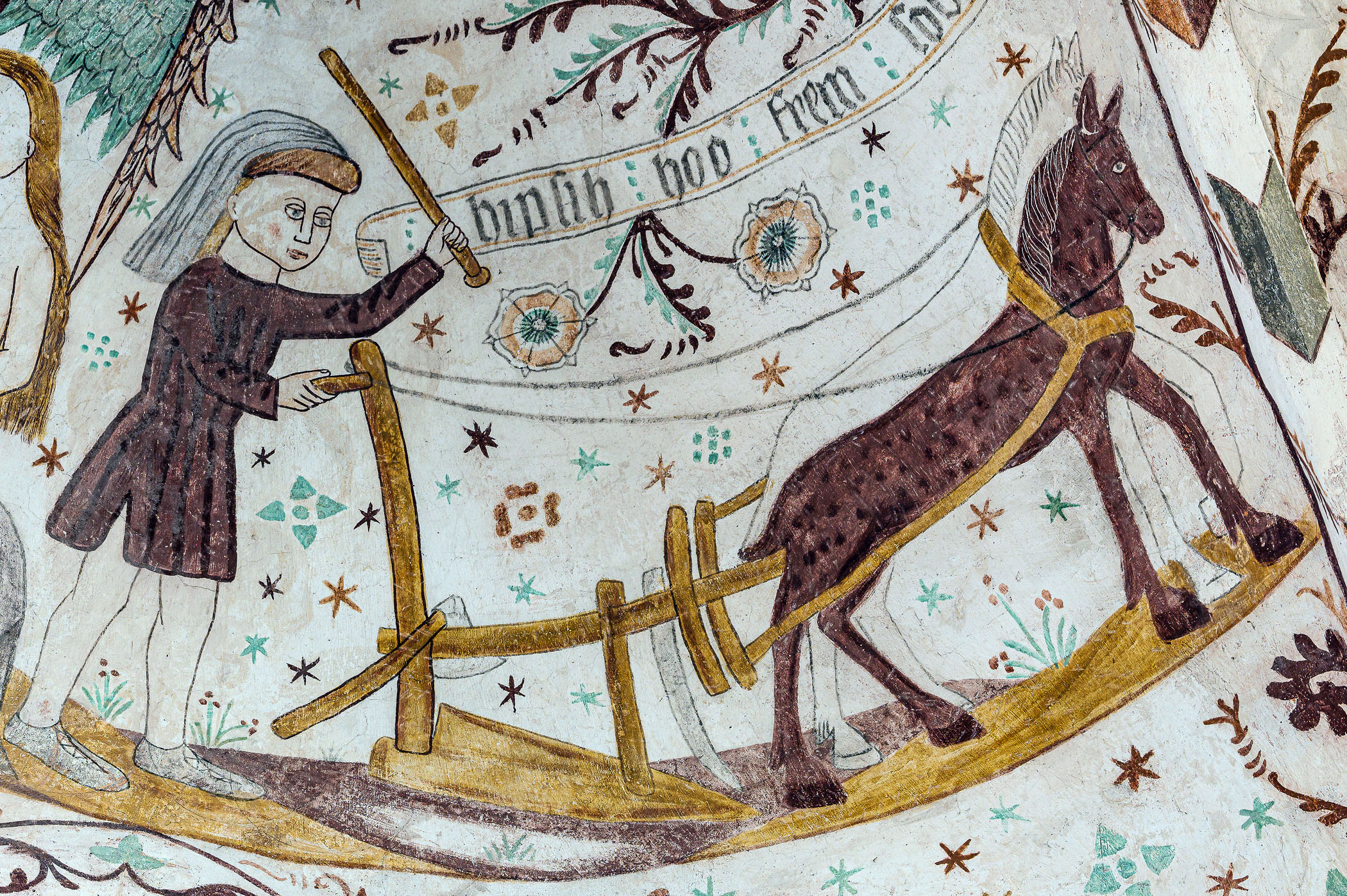
CULTURAL HISTORY
Animals: From Souls and the Sacred in Prehistoric Times to Symbols and Slaves in Antiquity
I begin this essay far away in time and topic from the focus of this volume. I do so because it is essential to understand the importance of animals to the human mind and consequently its expressions in arts, myths, rituals, symbolism, religions, literature, and the rest of the components of culture. As we shall learn, our lifeways—particularly our economic relationships—with animals determine our ways of seeing animals. Our ways of seeing animals have, in turn, much to do with our worldview, which includes views of nature, the supernatural/divine, and—it must be emphasized—ourselves in it all.
For the longest part of our existence as hominid animals, we had one kind of relationship with animals and then rather recently in evolutionary time we shifted to domestication and quite another kind of relationship. With the rise of the civilizations of antiquity, this ‘new’ relationship was already several thousand years old and becoming settled; nevertheless those civilizations were still struggling with the heavy baggage of the much older relationship. Much of the culture of the formative stages of these civilizations reflects this struggle. Thus, if we are to more fully understand the role of animals (and the emerging agrarian worldview) in antiquity, we must first stray from the theme at hand.
Movers of the Mind
Animals are more important than we think. Animals are—to use computer-era metaphor—hardwired into the basic circuits of our minds. Throughout the 5 to 10 million years of our hominid evolution we have lived among animals—noisy, lively, eating, drinking, sleeping, shivering, fighting, playing, copulating, urinating, defecating, bleeding, dying Others who fascinated us and provoked thought. Somewhat like us yet somewhat different, animals forced comparisons, categories, and conclusions. Animals moved our minds even as our minds were evolving. And they are still alive, well, and kicking at the deepest levels of our minds today.
Unfortunately, too few fully understand this. The late biologist Paul Shepard explained it best in Thinking Animals: Animals and the Development of Human Intelligence. ‘[T]here is a profound, inescapable need for animals that is in all people everywhere,’ he wrote; as shapers of the human mind and thought, there is ‘no substitute’ for them. This need for animals, Shepard says,
is no vague, romantic, or intangible yearning, no simple sop to our loneliness or nostalgia for Paradise. It is as hard and unavoidable as the compounds of our inner chemistry. It is universal but poorly recognized. It is the peculiar way that animals are used in the growth and development of the human person, in those most priceless qualities, which we lump together as ‘mind.’ It is the role of animal images and form in the shaping of personality, identity, and social consciousness. Animals are among the first inhabitants of the mind’s eye. They are basic to the development of speech and thought. Because of their part in the growth of consciousness, they are inseparable from the series of event in each human life, indispensable to our becoming human in the fullest sense.
Our prevailing worldview may block our understanding of this. We are too used to thinking of animals as important only in the economic sense—for food, materials, work, and, lately, as tools for finding cures for diseases. And human superiority, we think, gives us these entitlements over ‘lower’ animals. Ironically, we can hardly think about their importance to the very capacities—mind, speech and intelligence—on which we base our claims of superiority.
Imprinting a Full Deck
What evolved in humans, Paul Shepard says, ‘was not intelligence, but a development process.’ Genetics sets down the equipment—the brain, nervous system, and other organs—but it does not complete the process. Take vision, for example. Put a patch over the eye of a newborn animal and it cannot, in the absence of light, develop those final nerve connections and it remains blind even after the patch is removed. Similarly, the human brain needs animal types to help it make the connections that put the mind—and the external world—in order. Animal types are, Shepard says, ‘a necessary ingredient, like light shining on the eye of the newborn.’
Second, in producing the human brain, natural selection did not turn out an organ ‘that could assimilate an infinitely complex world like a stomach digesting meat.’ Instead, natural selection produce a linking device, one that takes ‘advice’ on types, categories, and the order of things from the types, categories, and order of things in the living world. ‘The clever brain employed the existing composition of plants and animals of the ecosystem itself as a master model. To have done it differently would have involved vastly more information storage of DNA and cumbersome connections and tissues.’
We don’t come into the world with a full deck, in other words; we have to print—or imprint—it ourselves. Thus the development of the mind and intelligence had to become part of the development of each individual—to be done again and again with each new human life. Fortunately, each new life does not have to start completely from scratch as it is born into a family, a tribe, and a culture. From these, the cumulative wisdom about types, groups, names, and the order in the world gets passed on.
Third, this whole setup makes the human animal highly adaptable to variations in environment and culture. If we had been born with brains already loaded with fixed ideas geared to a specific ecosystem, they would have served us only in that ecosystem. When the ecosystem changed with geologic and climatic events, we would have had no mental equipment to help us migrate or otherwise cope with the changes. As it is, we have an organ, the brain, which has the capacity for speech, thought, and the other activities we call mind so long as it is duly imprinted and informed by its environment in the developing years. In this way, our minds enabled our ancestors to spread out all over the world and live in greatly varying environments.
As environments varied, the ‘advice’ and imprinting varied and consequently human beings produced a great many kinds of cumulative wisdom about the world. These are the thousands of cultures of the world. To the eye, they appear to differ greatly in their beliefs, rituals, arts, and tools, but these very differences flow from the same source—the spongelike brain/mind that takes its shape and finds its order by sopping up the images, categories, and order in the world immediately around it.
Throughout evolution, human mind-sopping came largely from observing animals moving and doing their things. Trees, rocks, mountains, and other objects offered the mind rather simple, straightforward things to categorize and name. But the behavior of animals offered a way of making sense of concepts and intangible things, and these are important to human culture—that is, the carrying of learning and human experience from one generation to the next. Shepard explains:
The kind of learning that culture carries … is born on the symbolic vehicle of speech which, among other things, denotes intangible qualities, invisible events (as in the past or at a distance), spatial relations, personality traits, spiritual forces, and the whole adjectival realm of description. To the early humans and to the young human mind, these things are not perceptible; they are imageless. They cannot be seen in the self or even in other people. They are discoverable only as they inhere in other creatures. Friskiness, hunger, and patience can be seen respectively in pups, the searching coyote, or the waiting hawk atop a tree.
Animals’ behavior patterns could also provoke deeper thoughts about ourselves and the world—thoughts like who are they? and who are we? and the other whys and wherefores of existence. Animals were indeed food for thought; they offered a constant moving feast of wonders and puzzles for the mind. They offered sounds, body shapes, movement, and behavior that were strikingly similar to that of humans. The bear and the ape stood on their hind legs and lifted morsels to their mouths with ‘hands.’ Bison, elk, wolves, beavers, and many other animals called to each other; and they foraged, moved, and lived in groups like people. Much more compelling to the human mind, though, would have been the obvious similarities of sexual acts and bodily functions.
We are so very squeamish and silly about these today because our culture operates to distance ourselves from, and deny our biological kinship with, other animals. Our early ancestors, however, were intimate with the living world, not alienated from and hostile to it. When they followed a bison herd and watched a bull, penis red and dripping with semen, mount and move his loins against a cow they would surely vividly recall their own sexual experiences. On their daily foraging rounds, they were likely to see animals eating, drinking, defecating, and urinating—acts that are daily human experiences as well.
The Power of Animal Images
The presence of animals in our minds and culture shows up in their prominence in art. The earliest known artworks are scenes of animals painted on the walls of caves in Europe and Asia. The suggestion that those paintings reflect the food wishes of hunters is simplistic. Lord Kenneth Clark disputes this: ‘Personally I believe that the animals in the cave paintings are records of admiration. ‘This is what we want to be like,’ they say, in unmistakable accents; ‘these are the most admirable of our kinsmen…’’ The great bulk of their diet came from plants, yet animals were the main things on our ancestors’ minds. We ought to think about why there were so much more fascinated with deer than acorns.
In all of art since the cave paintings, it is probable that animals are represented more often than any other class of things in nature. Animals, as artists are well aware, can be used to convey many kinds of messages—even those that words cannot. In religious art, animals are often the major symbols for teachings and moral themes. The dove symbolizes peace, the lamb innocence and Christian compassion. In the bestiaries, the moral storybooks of the Middle Ages, ‘animal pictures became a kind of pictorial shorthand, a reminder of the Christian truths embodied in every creation of the natural world.’
In addition to their symbolic value, animals add feelings to art. As any serious lover of art knows, animals often set the mood of a painting. In bucolic landscapes, it is the cows chewing their cuds and dozing in the shade that convey the utter tranquility and dreaminess of countryside life. In paintings of battle scenes, it is the twisted bodies of horses with fear in their eyes that shout out the cruelty and violence of war. In his masterpiece Guernica, Pablo Picasso used such a figure to convey the horror of the Fascists’ surprise bombing raid on a small village during the Spanish Civil War. Many of our great works of art would not be nearly so powerful, or so tender, if the animals were removed.
Animals Embedded
In Thinking Animals, Shepard tells about ‘concealed creatures’ and ‘embedded figures’—more evidence that animals are, to use computer-speak, wired into our minds. Animals are moved by other things in nature to flee, breed, feed, fight, and so forth. With our more complex minds, animals often mean not only a meal or danger, but clues, signs, symbols—a whole language embedded in our minds. He tells of an experiment in which a man was given a brief glimpse of a silhouette of a tree stump. Its roots, branches, and contours form the image of a duck. Asked what he saw, the man did not indicate that he saw the duck. Then he was asked to describe a scene or tell a story. The story he told was full of references to feathers, nests, flight, ponds, and other things related to ducks.
This kind of perceptual activity goes on all the time, Shepard says. ‘As adults, we see creatures to which we do not attend, and… we weave them continuously into the flow of thought, from which they shed telltale signs into our conscious life.’ People suffering from some forms of schizophrenia are especially prone to spotting these embedded animals. In their withdrawal from the real world, perhaps the primitive, deeply embedded animal figures are more prominent in their minds. Shepard notes also how widely animal figures are used in intelligence tests, personality studies, psychological therapy, and perceptual research. ‘The whole realm of visual figure use in psychology, especially in the study of children, is shot through with animals.’
Consider the Rorschach test, in which the subject describes a scene or tells a story after being shown various inkblots. ‘The blots are usually seen as animals,’ he notes, ‘but the journals, books, and papers on Rorschach theory devote little attention to the most fundamental question that it raises.’ That these meaningless shapes are commonly seen as animal shapes is simply accepted.
The Power of Animal Stories
Language and folklore also depend heavily on animals to convey messages from human mind to mind. Joseph D. Clark’s book, Beastly Folklore, reveals nearly 5,000 examples of animal-based expressions. We say, for example, that a person is ‘mousy,’ ‘cowed,’ or ‘sheepish.’ People ‘play possum,’ ‘grouse’ about things or ‘badger’ someone. Anyone can list hundreds of examples and see how animals give vivid expressions to human language. According to Clark, no other set of things in the universe is found so often in speech. This constant animal presence in language, like that in art, tells us much about the importance of animals to the human mind.
Because they play into the ‘wiring,’ animal stories and images resonate, which gives them extra kick and clout. Aesop, a Greek slave in the sixth century BCE, was one of the first to use their potency to get moral and political messages across to a wide, popular audience. Francis Klingender explains that Aesop’s fables worked because of their ‘power to harness more primitive layers of the imagination.’ So effective were they that Gautama, the Enlightened One, or Buddha, borrowed several of them for his own spiritual teachings.
Of his ‘Birth Stories,’ or Jatakas, more than a hundred are animal fables of the same stock as Aesop’s. We find the same use of animals’ power on the imagination in children’s books and stories. As Margaret Blount explains in Animal Land, ‘An animal fantasy is a kind of imaginative launching ground that gives a built-in power of insight to narrative—one is half-way there before one has noticed.’
Playing Animal
Once they are old enough to walk and run, children the world over get much of their fun and exercise by ‘playing animal’—that is, by imitating animal postures, sounds, and behavior. In my own first- and second-grade years, my playmates and I spent most of our recesses cavorting about the playground as the animal of the day. Some of us would play like wolves and chase after each other. A classmate named Carolyn specialized in the horse, and she usually went into character as soon as the bell rang. Sometimes she would gallop, buck, and rear for nearly the whole play period. When the bell rang again, Carolyn would return to her desk, trotting and whinnying.
Much of the fun is the simple thrill of exercise and the joy of using our newly discovered hands, feet, muscles, and limbs. Play makes us try out our bodies and test them against gravity, space, and the other people and things around us. Playfulness in our ‘dub years’ is one of the things we have in common with other mammals. The instinct for it is stamped into the mammalian genetic code because it has such tremendous survival value in aiding the development of muscles, senses, coordination, and agility.
In humans, however, the play-acting is an important part of another kind of growth. Because we are such conscious animals, we have awareness of not only our body but also the vague, indefinable thing called ‘self.’ Thus in humans, self-actualization—or figuring out the self—is an important part of growth and development. This awareness of the self in humans produces a corresponding awareness of the Other, the people and things around one’s Self.
So we have the psychic chore of coming to terms with not only the Self, but the Other as well. Our collective failure to do so can lead to social problems—that is, problems among various people, or Selves. As we play-act the various animals by exaggerating their traits (as in leapfrog, horseplay, monkeyshines, fox-and-geese, ‘chicken,’ etc.) we find out that they are really not us and we are really not them. We take on their traits and, and the same time, we put them off. In imitating the Other, we establish its reality as a separate being, for if we have to imitate it we cannot be it. All that the child is aware of here, of course, is laughter and great fun, but deeper down, the child is working out the psychic boundaries between the Self and Others.
Totemism and Human Society
Totemism derives from the Algonquian (Chippewa) word, ototeman, for brother-sister kin, and in its original context referred to the lineal descent of members of a clan from its founding spirits—animal, plant, or other natural or supernatural beings. At the core of this view of the world is a set of myths or stories about how the world came into being—creation myths, we call them. In totemic culture, these stories usually explain not only how the world began, but also how the tribe came into being. They provide a base for a whole body of tribal legends and lore that give the tribe a sense of place and purpose in the world.
This body of stories and ideas about the world is an extension of the child’s process of self-actualization. It provides the social group, the tribe or clan, with an identity, a history, and a model for its lifeways. Just as the child uses animals to find its personal Self, the tribe uses animals (sometimes other natural beings, but primarily animals) to find its social Self.
Into adulthood, in totemic cultures at least, human beings continue to follow the teaching of animals—the most fascinating, informative beings in the world. As their creation myths suggest, totemic cultures see animals as First Beings, ancestors, and teachers. This view was best expressed by the Pawnee chieftain Letakots-Lesa when he told anthropologist Natalie Curtis in 1904:
In the beginning of all things, wisdom and knowledge were with the animals; for Tirawa, the One Above, did not speak directly to man. He sent certain animals to tell men that he showed himself through the beasts, and that from them, and from the stars and the sun and the moon, man should learn.
The most important myth of a society is its creation story, for it sets out the elements of the people’s worldview. Universal in creation stories is the prominence of animals, especially the most fascinating species of the region. These stories are surprisingly similar the world over. In Red Man’s Religion, anthropologist Ruth Underhill says that there are very few basic plots. Common in eastern Asia and North American is the story of the Earth Diver, in which the world at first is only water.
The first beings are diving birds or mammals—usually one of the species in the tribe’s domain lands. One of these divers brings up a piece of soil from which the earth is made. Then a First Being appears who commands the divers. In another plot, the solid earth was always here; it just required some shaping by the First Beings when they appear. In another, there is no world at all in the beginning; a First Being comes out of the nothingness and makes the earth and seas by force of will or by using pieces of its own body.
Whatever the origins of the land and seas, the First Beings in them usually are animals. Typically, they are animals with human abilities: they are in animal forms, but they speak and behave like humans. The subject of a great many stories and tales, they are often the creatures who transformed and shaped the earth to its present condition, and in many cultures, they are the ancestors of human beings.
Generally, this First Being is the most wily and intelligent animal in the tribal area. Among North American peoples, it is the mink, raven, or bluejay in the Northwest; in the Plains, it is coyote or grandmother spider; in the Northeast, it is the white arctic hare. In Guyana, for example, people ‘traced their primordial beginnings to animals (tigers [West Indian for jaguars], snakes, the water camoodi [a giant water snake]) or from animal-human procreation.
The Carib nation … was born from the fragments of a snake.’ In African traditions, ‘Animals with a powerful relationship to nature—the lion, tiger, elephant, and leopard—are most commonly found as totemic beasts, but, of course, an animal with cunning and mental alertness such as the spider might also take on this symbolic role.’ Among the !Kung San people of South Africa, who hunt their Master Animal, the eland, ‘the first eland appears in a curiously ambiguous relationship to their creator-god and trickster-hero, Kaggen (‘Mantis’).
After these First Beings, human beings come into the world. In most creation stories they are practically helpless, like infants. The older, wiser animal-people teach them how to make fire, tools, clothing, how to find food and to cook. They also teach the first humans how to perform the dances, chants, and ceremonies. Then, typically, the animal-people go back to the forests and streams and become animals as we know them. Their descendants are the animals of the tribe’s homeland.
The human beings, the tribe’s human ancestors, are now on their own, but they must continue to live and perform the ceremonies as they were taught. If they do not, the world will fall out of order. The attention to lifeways and the ceremonies, then, is not so much worship in the modern religious sense as it is a sense of obligation. It is what the tribe must do to carry out its end of the ancestral deal with the First Beings.
Primal Guilt
What I have said about the awe and fascination toward animals—the sense of kinship with them, the reliance on them as teachers and world-shapers—begs an obvious question: If primal (early totemic) people had such feelings and ideas about animals, how could they hunt, kill, and eat them? We know that they had none of the sort of feelings toward animals that today we call humane or compassionate. But we do see evidence in the form of certain beliefs and rituals that they had some feelings of discomfort, or guilt, about hunting and killing. This may seem off base unless we remember that they viewed prey animals as equals and, in some cases, as kin. An Inuit hunter’s statement reveals this feeling:
The greatest peril in life lies in the fact that human food consists entirely of souls. All the creatures that we have to kill and eat, all those that we have to strike down and destroy to make clothes for ourselves, have souls like we have, souls that do not perish with the body, and which must therefore be propitiated lest they should avenge themselves on us for taking away their bodies.
The mythologist Joseph Campbell, among others, notes a sense of actual guilt among foragers who hunted and killed animals for food. It was set up, in part, by their view of animals as ancestors, kin, and fellow beings. From this, he says, ‘A psychology of tension is thereby established on many levels, which it is the function of hunting rituals and their mythologies to resolve.’ These rites, he says, are evidence of guilt. Feelings of guilt or apprehension were resolved, in part, by belief systems that allowed the killing to be either painless or permitted by the supernaturals.
Societies that rely primarily on hunting for subsistence usually have a myth of a supernatural being known as the Master of the Animals. This figure is like a chief of the animal to be hunted—say, the caribou. According to typical tribal legends, a tribal ancestor had long ago made an agreement with the Master Animal that allowed the tribe to hunt and eat the caribou so long as the ceremonies were performed to show proper respect for the caribou herd. In Of Wolves and Men, Barry Lopez describes this belief among the Naskapi people of the Labrador Peninsula in eastern Canada:
The agreement is mythic in origin, made with an Owner of the Animals. In the Naskapi world this is the animal Master of the caribou because the caribou is the mainstay of the Naskapi diet. The Animal Master is a single animal in a great mythic herd. He is both timeless and indestructible, an archetype of the species. It is he who ‘gives’ the hunter the animal to be killed and who has the power to keep the animals away from the hunter if he is unworthy. In the foundation myths of every hunting culture there is a story of how all this came about.
In other types of hunter belief systems, the hunters must perform ceremonies of purification before and after the hunt. These are, according to mythologist Joseph Campbell, usually rituals of atonement indicative of some feelings of guilt. Campbell notes that the guilt and its ceremonial component are greater when the prey animal is closest to human size and shape. He gives the example of the Ainu of Japan who have elaborate atonement rituals for the killing of bears, whom they believe to be their ancestors and kinfolk.
Essentially, the ceremony express their belief that the bear is a great spirit who wants to be freed from his earthly body so he can return to his home in the spirit world. The Ainu word for this sacrificial killing means, literally, ‘to send away.’ Campbell reports that with all the ritual, the Ainu still show ambivalence about the killing. Often the women who have suckled the bear cubs alternately laugh and cry during the ceremonies.
In many of the other cultures with bear cult sacrifices, similar guilt-reducing ceremonies are practiced. ‘When the bear has been slain,’ Campbell notes, ‘it is usual to disclaim responsibility for his death. In northern Siberia today, the Ostyaks, Votyaks, Koryaks, Kamchadals, Gilyaks, Yakuts, Yukahir, and Tungus will say: “Grandfather, it wasn’t I, it was the Russians, who made use of me, who killed you. I am sorry! Very sorry! Don’t be angry with me.”’
British scholar James Serpell has described evidence of actual guilt by tribal hunters in Africa, South America, India, and Indochina: ‘Although it varies in detail from place to place, the undercurrent of guilt and the need for some form of atonement for animal slaughter is common among hunting people.’
Hunting in Perspective
We came to be human, the popular story goes, ‘because for millions upon millions of evolving years we killed for a living.’ So wrote Robert Ardrey, the best known of the popularizers, in his 1976 best-seller, The Hunting Hypothesis. From the beginnings of Homo erectus in Africa, he wrote, ‘we had to be pre-adapted to a diet consisting exclusively of meat and equipped with the skills of the chase that could guarantee survival.’
A recent book by Donna Hart and Robert W. Sussman stands the Ardrey thesis on its head, suggesting that early humans were more the hunted than the hunters, that our ancestors developed brains, tools, and social cooperation to avoid being killed by animals. That and more balanced views have not been as popular as those of Ardrey and his ilk. The contributors to The Evolution of Human Hunting say that early humans were more scavenger/collectors than hunters and that true hunting—socially coordinated stalking and killing with special tools—did not begin until about 20,000 years ago.
Why such a late start? Joseph Campbell speculates that Ice Age conditions expanded prairies and savannas, which in turn greatly expanded migrating herds of hoofed animals across the continents of the Northern Hemisphere. Many totemic societies became specialized hunters and, as such, could travel as far as the herd ranged—even into unfamiliar ecosystems. The ‘Great Hunt,’ he says, spanned from Europe across Asia into North America; a second wave extended into northern Africa.
Animal Powers
This strictly materialist view may not tell the whole story. It does not consider what might have been going on in the minds and culture of our species some 20,000 years ago. They may not have been simply opportunists as the above model suggests. Since all views on prehistoric hunting are based on ambiguous evidence and much speculation, I feel entitled to offer my own: Perhaps some tribes ‘tilted’ toward hunting because of totemic cultural views prevailing at the time.
I have in mind two rather large areas of prevailing ideas: ideas about animals and ideas about sex and gender. Animals intrigued our ancestors with their size, speed, strength, and behavior; they were First Beings, world shapers, teachers, and ancestors of the tribe. Animals gave early humans a handy way to ‘see’ the vague, formless, chaotic rest of nature. According to author Yi Fu Tuan, ‘When people want to express their sense of the force of nature, both in the external world and in themselves, they have found and still do find it natural to use animal images.’ Animals embodied or represented all of the mysterious powers of the world that humans did not have, which is why Joseph Campbell described totemic culture as ‘the way of the animal powers.’
Female Powers
The other great and powerful mystery in primal or early totemic culture was the notion of the Female Powers. Women’s roles as child bearers, midwives, food gatherers, food preparers, food sharers, healers, shamans, and all-around nurturers contributed to considerable female status. In an age when the kin group was everything, females carried on the life of the kin group via children, food, herbal medicines, and much of the knowledge of the magical powers in the world that could help or hurt her kinfolk. The mother role was central, of course, but it was bolstered by women’s embeddedness in the weave of primal lifeways. To be female was to be in continuum with the major mysteries of childbirth, the silent but potent plant world, the fecundity of other animals, and the growth and regeneration of the living world (which we now sterilize and make into an abstraction with words like nature and environment).
Of all these roles, the procreative was the most compelling. It gave females a strong sense of personal identity and security as well as power and status within the kin group. Thus the female gender identity is automatically defined by the mother role. Because women have built-in ways of showing their womanhood, men strive for ways to display their manhood. Anthropologist Henry S. Sharp, in his study of northern Canada’s Chipewyan people, put it this way: ‘To be female is to be power, to be male is to acquire power.’
Bear in mind that primal people had no way of understanding reproductive and birth cycles. With nine months separating the act of coitus from the birth event, it is unlikely that they could have connected the two. From hunting, they had intimate and specialized knowledge of the habits of animals for the purpose of locating and following them to make a kill. It is unlikely, however, that they could have maintained contact with one animal or a few specific animals over a long enough period of time to see how copulation is linked to birth.
The ‘discovery’ of fatherhood would have to wait until people began to domesticate animals and to live continuously with the same few individual animals over a long period of time. But until then, women ‘owned’ the birth mystery and were revered as the givers of life. The primal explanation of this most powerful mystery was that women had close connections to the awesome powers of nature. Indeed, primal people believed that women were part of these forces of nature that could either sustain or destroy, that could either bring forth human life or take it way.
These female powers inspired the other type of first art: the ‘Venus’ figurines or ‘naked goddesses’ of the late Stone Age. They, too, reflect what was most fascinating to the primal mind, what things were seen as the most powerful mysteries and forces in the world. Whereas the cave paintings depicted the Animal Powers, these first sculptures depicted the mysteries of the female—pregnancy, childbirth, fecundity, continuing life for the kin group.
One such figurine found in a burial site suggests a female role in receiving the dead and the delivering of their souls to rebirth. We do not know exactly how primal people used these figurines. They may have used them as fetishes to aid childbirth, as idols/protectresses of the family hearth, or as sacred objects in ceremonies having to do with the life and fecundity of the kin group. Nevertheless, archaeologists have found them all across Europe and Asia in sites that date from thousands of years before agriculture begins. They are evidence of an mythology in which the outstanding human powers and their form were female.
This mythology flourished until well into the agricultural period when the Naked Goddess came to be called Lady of the Wild Things, Protectress of the Hearth, Consort of the Moonbull, and many other names.
Why Hunting?
But back to the question of why men took up organized hunting. I submit that men hunted to enhance their own status in the kin group. Males needed some means of achieving a balance of power against the Female Powers. Every animal killed and eaten offered a bit of the Animal Powers. ‘Like the sun, the moon, and the stars, animals [were] aspects of the natural order, every species endowed with a power of its own, which [was] manifest in its individuals.’ The hunt, in my view, was not so much about acquiring food as it was about acquiring power—the animal’s power. Taking the carcass back and eating it with one’s family and kinfolk enabled the whole group to share in the taking of the animal’s power.
The attitude was similar to that of cannibals, who eat the flesh of their respected enemies and heroes to acquire their power, not their protein. In addition to the prestige gained by taking an animal’s power, hunting gave men some role, and hence some status, as food providers. Women’s foraging consistently brought in the bulk of the diet, but it brought no excitement. The hunt required much preparation and it produced much excitement, which, of course, grew out of people’s emotional conflicts, which grew out of their sense of the Animal Powers. Richard Leakey noted this hunt excitement in the !Kung people of southern Africa:
… there was almost certainly more excitement about the men’s contribution than the women’s, even though the plant foods essentially kept everyone alive. There is a mystique about hunting: men pit their wits and skill against another animal, producing the silent tension of stalking, the burst of energy and adrenaline of the chase, and the elation of success at the kill. The challenge of a hunt is overt and visually impressive, the more so the bigger and fiercer the prey. Meanwhile the undoubted cerebral skills in mapping the distribution of plant foods, and knowing which will be ripe when, are much more calm, covert, and apparently unimpressive.
I have not dwelled on totemic culture of primal societies in prehistoric times too much. It is important to understand their views of the living world if we are to fully understand how domestication sparks the transformation into an agrarian society and culture that is well under way even before the historical period.
For primal society, the living world was neither an abstract concept like nature or environment, nor was it a warehouse full of resources as we see it today. The world out there was alive and full of beings, souls and powers. Other living beings, especially animals, were regarded simply as other kinds of beings with lives, spirits, and powers of their own. Sometimes people saw them as friendly, sometimes not; nevertheless, they saw animals as having powerful spirits. The deities/gods/supernaturals—the powerful spirits or the sacred—were in and of the living world. They dwelled in it. On occasion, they could take the form of an animal, plant, or other thing.
Under this worldview, then, things seen as close to nature shared the powers and were given considerable status and respect. I emphasize this point because we will refer to it again and again as we follow the transformation into agrarian society and its new worldview. As we have seen, women especially drew their identity, status, and generally powerful place in primal society from the perception that they were somehow close to the mysteries and powers in nature. Men acquired theirs by mastering ways to take nature’s powers—in the form of large, impressive animals. In either case, being seen as close to nature was good and powerful in primal society.
A New Relationship with Animals
About 13,000 years ago the earth’s most recent great glacial ice cap was melting away because of a warming trend. No one knows for sure exactly how and why, but by about 10,000 years ago human groups at scattered locations from northern Africa eastward to India and Southeast Asia were gathering wild plant seeds and sowing and cultivating them. At about the same time, their hunting turned into tending herds of indigenous sheep and goats, and before long, cattle and other animals familiar to the barnyard today. Hunter-gatherers—foragers—gradually became farmers.
The transition occurred in fits and starts. The first farmers still moved with the seasons and kept up many of their foraging ways. But over time, foraging gave way to farming, sedentary lifestyles, village life, and dependence on domesticated plants and animals for food. I leave it to others to discuss the nuances of the various theories about why foragers turned to farming. For here, it is enough to say that they all boil down to human population density as the prime mover. In some ecosystems, human numbers crept upwards and people had to intensify food procurement—by gathering, hunting, planting, and herding.
In the hilly regions of what is today the Kurdish region of northeastern Iraq, some tribes who specialized in hunting wild sheep and goats began to assert greater control over the herds. They were probably responding to the population pressures in the region, and they intensified what they already knew best—hunting. They may have begun by selecting certain animals—males and the younger animals.
Over time, these selective, systematic killings became, in effect, a primitive form of herd management. As they were still totemic and respectful of the Animal Powers, perhaps there were mythic and ritual elements that drove the selections. A band of foragers may have attached itself to a particular herd, which became ‘their’ herd to follow, cull, and live from. Along with systematic culling, the band asserted some control over the movements of their herd to the best grazing and watering areas.
Little by little, these first herders learned the rudiments of animal husbandry—techniques for control over the mobility, diet, growth, and reproductive lives of their herd. In the course of centuries, perhaps millennia, they learned about the dynamics of sex, reproduction, and the roles of male and female. They learned selective breeding, that is, the selection of males and females to breed for offspring with desirable characteristics. In its earliest stages, the desired characteristics may have been coat color and pattern, horn shapes, or other features to help the ‘owner’ band distinguish their animals from those of neighboring bands.
From Powers to Commodities
Domestication and animal husbandry brought economic advantages, but they also brought about an unsettling of the very old and deeply held totemic ways of seeing animals and the living world in awe. After centuries of animal husbandry, men gained conscious control over animals and their once-mysterious life processes.
Castrated, yoked, harnessed, hobbled, penned, shackled, and their sex lives controlled for human gain, domestic animals were thoroughly subdued. They had none of that wild, mysterious power of their ancestors. They were disempowered and reduced, and they came to be seen more with contempt than awe. In reducing domesticated animals, farmers reduced animals in general and with them the living world that animals had symbolized.
Crop-conscious farmers saw wild animals as pests and natural elements as threats. But it was the reduction of animals through husbandry that was the main driver of the radically different worldview that came with the transition from foraging to farming, for it broke up the old totemic ideas of kinship and continuity with the living world. This, more than any other factor, accelerated human alienation from the living world.
From Totem Animals to Sacred Herd
The reduction of animals came gradually with the long transition from forager to farmer culture. Well into historical times, agrarian societies had their bull gods, ram gods, and many other animal-shaped deities that were a carry-over from the older totemic times. Francis Klingender traced this continuity in the art of Egypt and North Africa and found that, ‘as the various clans began to breed cattle and live on their milk, they transferred to their herds the notions of sanctity and kinship which formerly belonged to species of wild animals.’
The sanctity of totem animals and the Animal Powers in general went into decline. In the earliest stages, the Master of the Animals became the Sacred Bull or Ram. This imaginary animal was a deity who was the spirit of the herd and who was worshipped or appeased to ensure the protection of the herd. In herder cultures, chiefs/kings often identified themselves with this sacred animal to enhance their power and prestige with the spirit animals’ cult followers.
Eventually, the kings used the association to enhance their own pretensions to deity so that the king himself was the human personification of the Sacred Bull or Ram. In their capital cities, these rulers maintained sacred flocks of sheep or herds of cattle that could not be killed or eaten except through ritual sacrifice.
The Herder Legacies
The Fertile Crescent of the Middle East was the epicenter of domestication of the large herd animals—sheep, goats, cattle, horses and camels. Two points: First, this put a unique ingredient into the development of Western culture from the very start. As Alfred Crosby says, ‘The most important contrast between the Sumerians and their heirs, on the one hand, and the rest of humanity, on the other, involves the matter of livestock.’
Second, this ingredient created huge repercussions—results that are way out of proportion to the simple beginnings of animal domestication. As German sociologist and zoologist Richard Lewinsohn put it a half century ago, ‘the specific variations produced by domestication may be small in a zoological sense but they are enormous from the sociological point of view, for they have effected deep-reaching transformations in the history of both human beings and animals.’
Pastoralists, as anthropologists call herding societies, seems a misnomer as it evokes images of gentle shepherds watching over tranquil flocks and fields. As Lewinsohn says, ‘Only in pastoral poetry were the shepherd folk peace-loving. In reality they were not far behind hunters in rapacity and belligerence.’ Herding societies tend to be obsessed with their herds, for the animals are both their tribal identity and their livelihood. The herd is everything to them, and nothing gets between their herd and the best pasture and water. If anything does, the obsession turns to ruthlessness, defiance, and violence. Paul Shepard:
Around the world common elements run through their cultures: an obsession with the goat, cow, horse, sheep, or camel so extreme that every aspect of life mediates or embellishes its image; aggressive hostility to outsiders, the armed family, feuding and raiding in a male-centered hierarchical organization, the substitution of war for hunting, elaborate arts of sacrifice, monomaniacal pride and suspicion.
British anthropologist B.A.L. Cranstone corroborates these views of herder culture after looking at herdspeople in Melanesia, North Africa, Syria, and Russian Turkestan. Since animals are the only form of wealth that is self-mobile, he says, their keepers need to be constantly on guard. ‘People who depend heavily on animals are, therefore, usually warlike because they have to be prepared to defend their herds.’
More warlike are those who herd camels and horses, for these are powerful animals and valuable because they can run far and fast. Less warlike are people who herd sheep, goats, and the smaller more controllable animals. Anthropologist and popular writer Marvin Harris has studied a variety of human cultures looking for common elements. In Cannibals and Kings, he noted that ‘most nomadic or seminomadic pre-state pastoral societies are expansionist and extremely militaristic.’
The Shepherd-Flock Model
Joseph Campbell says of human societies, ‘The earliest model was of the animal world and the hunt, where the animals slain were the sacrifice.’ Just as animals provided a model for totemic society, so they did—though reduced—in agrarian society. Sir Keith Thomas wrote that, ‘domestication …became the archetypal pattern for other kinds of social subordination. The model was a paternal one, with the ruler a good shepherd—like the bishop with his pastoral staff. Loyal, docile animals obeying a considerate master were an example to all employees.’
This model and these pastoral images are pervasive in Western culture. We look reverently upon notions of the Good Shepherd and the benevolent patriarch because our agrarian culture is so heavily weighted with the herders’ legacies. The good, civilized man shepherds or husbands his family and property, his household, his community, his nation, and, by extension, the entire living world.
The Good Shepherd model produced the modern secular idea of stewardship, which is supposed to be the benign control and exploitation of the living world. It provided a model for the patriarchal nation-states of early civilization: the good king tended his fold of subjects. The king had absolute authority over his people just as the shepherd ruled over this flock and the patriarch ruled over his clan. The subjects owed complete loyalty and submission to the king just as the sheep obeyed the shepherd and the clan obeyed the patriarch.
Over time, the model elevated many Middle Eastern kings to the level of gods. And the model grew, of course, into the West’s monotheistic religions, whose great king of heaven and earth tends over the flock of the faithful. Sociologist Gerhard Lenski finds the same concept of one all-powerful god in many herding societies: ‘In forty of the fifty herding groups for which [George Peter] Murdock provides data, there is belief in a Supreme Deity who created the world and remains actively concerned with its affairs, especially with a people’s moral conduct.’ Lenski says the occurrence of the belief in this kind of god, ‘varies directly with the importance of herding activities to the particular group.’
Lenski notes some of the other features of herding societies: ‘…marked social inequality … [h]ereditary slavery … raiding and warfare … military advantage over their less mobile agrarian neighbors.’
Some may object that dictatorship, warfare, and slavery naturally accompany the growth of the agrarian state. These horrors occur even in Mesoamerica, where dogs and turkeys were probably the only domesticated animals. But in the Middle East, royal power, wars, raiding, and slavery take on extra dimensions because of the cultural influence of the herding peoples there. Remember that these large animal domesticators came from a long tradition of specialized hunters, so they had their hunter-warrior skills intact.
Obviously, these went a long way toward helping them build up their herds—their wealth and security. From the perspective of a hunter-warrior, how much more glorious (as well as easier and faster) it was to increase the herd by raiding than by slow, plodding husbandry. Warrior skills also helped keep the wealth, for a prosperous tribe had to be constantly on guard against raids by others. Herders were markedly more expansionist than ordinary farmers. Planter folks were confined to a few acres in a valley or along a river bank and they expanded their fields relatively slowly—over years.
Herders, on the other hand, arrogantly dominated an entire region through military force, thus ensuring access to the best range land and water sources. In the Middle Eastern center, at least, herders were the best positioned to fill the warrior class, out of which arose the ruling elites and kings. Consequently, the entire hierarchy and culture in the region was imbued with the herder’s fierce, expansionist values. When these became integrated into the agrarian state’s religion, military, and other governing institutions, they made for ruthless nations and frequent wars of conquest.
Animal Sacrifice
As farming regions became more populous and urban settlements grew larger, hunting could not provide enough flesh to satisfy the masses. Domestic animals were at hand, but guilt and the vestiges of old totemic beliefs—especially the sense of kinship with the Sacred Herd—did not permit their wholesale slaughter. As Lord Clark puts it, ‘While men still felt a kinship with animals, to eat them was a crime against the group, and expiation could be achieved only by a ritual feast in which all were involved.’
So guilt-spreading and communion—or redistribution—were the first bases for animal sacrifice. The practice took on layers of religious importance over the centuries. The belief emerged that the gods could be pleased by the sacrifices and that they would protect the crops and the people from disasters.
Eventually, as rulers associated themselves with the Sacred Herd and conspired with the priestly class to conduct the state religion, animal sacrifices became an assertion of royal and priestly authority. Throughout the ancient world, animal sacrifice followed the same basic formula: the animal was delivered to the temple and after a ceremony designed to make the animal appear willing to be slaughtered, a priest carried out the ritual killing. The priest then burned a small amount of the fat or meat as an offering to the god or goddess. The rest of the animal’s carcass was either returned to the owner, redistributed to cult followers, or sold to others.
The ceremony was set up to make the gods responsible, according to Serpell. ‘According to an ancient Babylonian text, the head priest actually bent down to the ear of the slaughtered [animal] victim and whispered, “this deed was done by all the gods; I did not do it.”’ Note that this blame-shifting device is identical to some of the older forms of ritual killing practiced by primal hunters.
These ritual sacrifices became more and more frequent as the kings and priests conspired to buy peace and public support through more and more lavish public feasts. In time, the king’s Sacred Herd became less and less sacred and the temple where the ritual slaughtering was done took on more and more of the character of a commercial slaughterhouse. The scale and the frequency of the rituals, says Serpell, indicate that they were ‘little more than “a transparent excuse for festive feasting.”’
Lord Clark tells of ‘the enormous scale on which it took place from early times. In the Odyssey, no feast, no landfall, no hospitable welcome, no gift-laden departure, is conceivable without the sacrifice of animals… and the Parthenon is said to have stuck like a slaughterhouse.’
In time, animal sacrifice outwore its usefulness as a redistributive feast. Society was getting too large, and rulers simply could no longer provide meat for everybody as they did in earlier times. It ended, too, because of agrarian society’s emerging ideas about property and ownership. Wealthy herders and farmers would have resented the priesthood’s monopoly on slaughtering their animals.
The practice was like a tax and it hampered trade in animals and their products; it made no sense to have the trade restricted by old-fashioned religious ideas. Animals would have to have less spiritual value and more secular value; they would have to stop being gods if they were to serve as money. But the waning of animal sacrifice did not put animals in higher regard. On the contrary, agrarian society’s growing needs for them called for another wave of reduction.
Misothery: Animal Hating
I have coined the word misothery (miz OTH uh ree) to name a body of negative ideas about animals and nature. It comes from two Greek words for ‘hatred’ or ‘contempt’ and ‘animal.’ Literally, then, misothery is hatred and contempt for animals. And since animals are so representative of nature in general, it can mean hatred and contempt for nature—especially its animal-like aspects. Tennyson described nature as ‘red in tooth and claw’—that is, bloodthirsty like a predatory animal. In another version of the same idea, we say ‘it is a dog-eat-dog world.’ These are misotherous ideas, for they see animals and nature as vicious, cruel, base, and contemptible.
We sometimes use such expressions to describe human nature. Among the meanings for the word animal in most dictionaries are: an inhuman person, brutish, bestial. In The Concise Oxford Dictionary (9th ed.), bestial is defined as ‘brutish, cruel, savage, sexually depraved.’ Thus we call someone an ‘animal’ when we want to insult and debase him or her. It is an epithet applied to the cruelest, most heinous criminals.
Serial killers are usually referred to as ‘animals’ in the popular press. We describe horrible human beings as ‘animals,’ ‘beasts’ or ‘brutes’ (an old word for animal) when we want to describe their egoism, insatiable greed, insatiable sexuality, cruelty, senseless slaughter of other beings, and the mass slaughter of human beings—all of the kinds of behavior that are, as John Rodman wrote in his ‘Dolphin Papers,’ ‘more frequently observed on the part of men than of beasts.’
I have deliberately constructed the word misothery for its similarity to the word misogyny, a reasonably common word for an attitude of hatred and contempt toward women. The similarity of the two words reflects the similarity of the two bodies of attitudes and ideas. In both cases, the ideas reduce the power, status, dignity of others. Misogyny reduces female power/status/dignity and so it aids and abets the supremacy of males in patriarchal culture. Misothery reduces the power/status/dignity of animals and nature and so it aids and abets the supremacy of human beings in our dominionist culture.
In the Middle East where exploitation of domestic animals was key to the wealth of budding nations, agrarians invented misothery to push the reduction. The builders of the bustling city-states preached misothery in their arts and in their rising, new agrarian religions. In these, the essential message was to debase animals and nature and to elevate human beings over them. The effect, spiritually speaking, was to turn the world upside down: Before domestication, the powerful souls or supernaturals (or gods) were animal and primal people looked up to them; after domestication, the gods were humanoid and people looked down on animals.
The Agrarian’s god might be a living Sumerian or Assyrian king, or it might be Zeus, Jupiter, Aphrodite, Venus, Artemis, Diana, or any of the other human-shaped gods of Greek and Roman polytheism, or it might the be super-man Yahweh, God, or Allah of Middle Eastern monotheism. At any rate animal-using agrarians stripped animals of their souls and powers and put them in what they perceived to be their proper place: in the service of superior humankind.
Beast Fights in Sumerian Art
We can see graphic evidence of animal reduction and misothery-in-the-making in Mesopotamia. Here the favorite motifs are scenes of animal processions, animals fighting, and men fighting animals. These scenes are found on temples, murals, and pottery and in sculpture.
According to Klingender, they show up in great numbers on the famous cylinder seals and they ‘provide a continuous record of the changing fashions in Mesopotamian art for almost three thousand years, from the middle of the fourth millennium to the collapse of the Persian Empire in the fourth century BCE.’ In the earliest, proto-literate stage known as the Uruk period, the prevailing themes were ‘serenely pastoral, in marked contrast to the later subjects of Mesopotamian art.’
Early on, the main theme was the sacred temple herd. The animals—cattle or sheep—are depicted in a peaceful procession, usually in natural settings. These are docile domestic animals moving in single file to the fields. These ‘animal file’ scenes evoke bucolic feelings of the calm and order of a well-to-do agrarian city-state.
Then, gradually, a second major grouping of scenes appears on the cylinder seals. In these ‘beast-hero’ scenes, the animals are reared up, usually in confrontation, as on heraldic coats of arms. On some, a pair of heroes—possibly Gilgamesh and Enkidu—grapple with bulls or other beasts. On others, ‘a hero may grapple simultaneously with a beast on either side, thus forming a triad representing a kind of fighting antithesis to the tree-of-life,’ says Klingender. Later on a third major theme appears: one that ‘consists of a continuous frieze of fighting creatures, usually lions and other beasts of prey attacking cattle, with herdsmen defending their flocks.’
By the thousands, the cylinder seals illustrate Mesopotamia’s changing views of animals and nature. In the process, says Klingender, ‘detachment was achieved’ when the lifelike, naturalistic animals of the early period—when animals were still sacred under the remnants of totemic ideas—are shown distorted and stylized in the later periods—when animals had been reduced to symbols. ‘This probably reflects the taste of the barbarians who invaded Mesopotamia.’ These would have been horse-mounted warrior peoples who burst out of the northern Middle East in the third and fourth millennia BCE. In waves of raiding to the south, they left their mark on Mesopotamia, its art, and apparently, its views of animals and nature.
These developments in art reflected a deeper psychic/cultural shift: the reduction of animals from lively, ensouled, kindred beings to frozen symbols of human power over nature. In Mesopotamia, according to Lord Clark, ‘the sense of kinship with animals has been superseded by an overawed recognition of their strength, which can be used to symbolize the terrible power of the king.’
Klingender says that ‘animal art of later civilizations in Western Asia was wholly under the sway of this [Mesopotamian] achievement.’ He notes that these rampant, fighting beast motifs show up on a gigantic scale in Hittite palaces and temples. More of the same at Assyrian sites and later still, at Nebuchadnezzar’s Babylon and in the palaces of Persian kings at Suza and Persepolis. ‘Their influence on the other great styles is no less remarkable: they contributed decisive elements to the arts of early Greece, the later Roman Empire, Sassaid Persia, Bysantium, the Muslim world and medieval Europe.’ He means, of course, the motifs, themes, and scenes—the style of the art.
But we know that art reflects a society’s deepest ideas about the world, so the widespread popularity of these styles also tells us something about the spread of Middle Eastern agrarian culture. Obviously, its ideas about the order of humans, animals, and nature had appeal far and wide wherever domestication had begun. And the Mesopotamians, with some help from the hordes of horse-warriors from the North, furnished the graphics that best illustrated this new order. They were the first propagandists for misothery, and these notions were thoroughly ingrained in the cultures of the region by the time of Abraham and the beginnings of the monotheism that endures today.
Patriarchy
Male usurpation of female power came from the joining of three forces: First, male jealousies of the Female Powers discussed above. This institutionalized male envy carried over into the agricultural period in which sedentary living, population density, and the growth of towns and cities made hunting less practical and successful. Thus hunting and its rituals gradually ceased to offer men a means of compensating or balancing against the Female Powers. Male envy then turned on the female principles (and on women) and worked to reduce and co-opt them and bring them under male control. Second, the Female Powers gradually eroded as agriculture demystified nature.
These powers, as noted, had been grounded in women’s association with the mysteries of procreation specifically and nature’s mysteries in general. As society took greater control over nature through irrigation, clearing, plowing, and other methods of intensified agriculture, it came to regard nature—and thereby women—with less and less awe. In battling weeds, pests, predators, drought, and capricious storms, farming society came to regard nature as more foe than friend. Farmers learned contempt for what they could control in nature and they learned fear and hostility for what they could not control. Insofar as women had been associated with nature, their powers, status, and essence tended to change accordingly.
Third, the discovery of fatherhood struck the most overt blow to female prominence. As noted, procreation—the most powerful mystery in nature—was exclusively woman’s. After centuries of animal husbandry, ideas about male fertility began to emerge—especially in the Middle East, the epicenter of herd animal domestication. These would have been at war with the much older yet still prevailing ideas about the Female Powers and their manifestations in goddesses and fertility cults. ‘The circumstance which might drastically redirect such attitudes,’ wrote feminist author Kate Millet in 1970,
would be the discovery of paternity. There is some evidence that fertility cults in ancient society at some point took a turn toward patriarchy, displacing and downgrading female function in procreation and attributing the power of life to the phallus alone. Patriarchal religion could consolidate this position by the creation of a male God or gods, demoting, discrediting, or eliminating goddesses and constructing a theology whose basic postulates are male supremacist, and one of whose central functions is to uphold and validate the patriarchal structure.
Patriarchy, like any other cause on the make, needed to have God and morality on its side. As we might expect, in the ideological warfare that ensued between the emerging male rule and the older female-powered egalitarian order, both religion and ethics were invoked to reduce women and to elevate men. Myth, as Kate Millett notes, ‘is a felicitous advance in the level of propaganda, since it so often bases its arguments on ethics or theories or origins.’ In Western culture, there are two leading origin-of-evil myths—that is, myths that purport to explain why the world is so full of toil and trouble.
One is Hebrew, the other Greek—the two principal feeders of Western thought and culture. Both are crassly misogynist. Both have their taproots in herder culture. The Greek story of Pandora’s box credited woman with opening the box and releasing evil into the world. According to Millet, the myth served two purposes: It discredited and reduced Pandora, who was probably one of the older fertility goddesses of the Mediterranean, and it promoted the idea of feminine evil and destructive influence. In his account of the myth, the Greek poet Hesiod described Pandora as the original of ‘the damnable race of women—a plague which men must live with.’ She introduced evil through what the patriarchal Greek mind saw as a uniquely female product: sexuality.
In his Works and Days, Hesiod described Pandora as a dangerous temptress with ‘the mind of a bitch and a thievish nature.’ She had ‘the cruelty of desire and longings that wear out the body.’ She was full of ‘lies and cunning words and a deceitful soul.’ Pandora was a snare sent by Zeus to be ‘the ruin of men.’ Millet notes the hypocrisy and mendacity of the Greeks’ patriarchal propaganda: ‘When it wishe[d] to exalt sexuality, it celebrate[d] fertility through the phallus; when it wishe[d] to denigrate sexuality, it cite[d] Pandora.’
The Hebrew myth of The Fall From Grace is strikingly similar to that of Pandora. It is, however much more central to the Judeo-Christian-Islamic tradition and to our present worldview. Even for the non-religious, says Millet, ‘this mythic version of the female as the cause of human suffering, knowledge, and sin is still the foundation of sexual attitudes, for it represents the most crucial argument of the patriarchal tradition in the West.’ The story of Eve and The Fall in Hebrew tradition also suggests that Eve, like Pandora, may have been a fertility goddess in earlier times.
At one point in Genesis, it says that Adam named her Eve ‘because she was the mother of all living things.’ So, like the Pandora myth, the Hebrew myth was double-barreled propaganda: It demoted a female deity while it reduced women in general. Millet explains that the monotheistic, patriarchal Hebrews lived in a continual state of war with the fertility cults of their neighbors. In this situation, the story of Eve and the Fall helped to solidify Hebrew identity against the wickedness and backwardness of their enemies.
Another parallel to the Pandora myth is that woman’s sexuality tempted man and brought about original sin, shame, and evil in the world. In the Eve myth, the sex act is disguised in language about eating forbidden fruit from the tree of knowledge of good and evil. Scholars have pointed out that the Hebrew word for ‘eat’ can also mean coitus, and that throughout the Bible the word knowing is synonomous with the sex act—as in carnal knowledge or he lay with her and knew her.
Again, as in the Pandora myth, a god-the-father figure punished his subjects for taking up sinful sex. Adam and men were condemned to endless toil and adversity, while Eve and women were sentenced to inferiority and the pains and sorrows of childbirth. As Millet notes, ‘the connection of women, sex, and sin constitute[d] the fundamental pattern of Western patriarchal thought thereafter.’
Spreading the Seeds of a Worldview
Over the many centuries that it took to build agrarian society, male-dominant herding peoples with their values on aggression, expansion, and war-making naturally took it over. When they conquered and annexed a region, they put their stamp of culture on it and herder ways and views came to dominate the Middle East both geographically and culturally.
Over time, herder culture provided the dominant threads in the agrarian culture of the Middle East. Only in that center of civilization was such a powerfully male-supremacist worldview woven so early into the usual fabric of agricultural society. There, herder culture colored the entire process—from the early increase in the scale of society to the emergence of classes, ruling elites, and labor specialization, and, finally, the building of the agrarian state itself with its taxes, bureaucrats, patriotism and wars of conquest. Early on, herder culture gave hue and pattern to the formation of Western civilization and its motif was a world for males only with every other kind of living being in service to them.
We can see much of this process unfold in the early history of Mesopotamia, which began about 3,000 BCE. Historian Gerda Lerner believes that this was the beginning point of a 2,500-year process in which female power and status gradually fell while male power and status rose. Before this process began, male-female relations were roughly egalitarian, although the greatest spirit-powers or deities were female; at the end of the process, men ruled over women as they ruled over the livestock and there was one deity—an all-powerful male god, the Great Shepherd.
In the process, she says, military strong men became chieftains over villages, established dominance over previously communally held temple lands and herds, gradually pushed the priests into the background, and took on the role and symbolic trappings of the priests’ closeness to the gods. Eventually, the strongest of these chieftains would become kings and after centuries of regional wars the strongest of the kings would become emperors.
Throughout these times, the arts reflect the strength, courage, and dominance of powerful ruling men. They are shown slaying enemies in battle, of course, but their god-like power is best shown in scenes of them slaying lions, who, as the most powerful and dangerous of beasts, symbolize the forces of nature.
This agrarian worldview was spread far and wide primarily by cattle and horse herders of early antiquity. Paul Shepard calls this the ‘Neolithic dialect’—the conflict between herders and settled farmers in the ancient civilizations. With their ‘walking larders,’ herdspeople migrated around the Mediterranean into Northern Africa and Europe and eastward across Asia spreading their culture along the way: Hurrians, Aryans, Hittites, Mittani, Luwians, Kassites, Achaeans, Dorians, Kurgans, and many other tribes whose names have been lost.
Their ‘jostling readiness to kill remind us that Western civilization has a heavy heritage of pastoral thought. From the Hun and Scythian horsemen, Mediterranean goat- and ass-keepers, Semitic cattle-breeders, Persian shepherds, and Arabian camel-lovers, from them and other animal-keepers the Western world obtained its premises of a world view.’
As we examine the arts and culture of the ancient world, we will see their fingerprints: The misogyny of the Hebrews when they wrote Genesis ca. 800 BCE; the misothery of ancient Greece, whose Plato wrote in The Republic of ‘the wild beast within’ the human soul; and, in contrast—perhaps as propaganda—the kindly Good Shepherd symbolism throughout Judaic-Christian-Islamic mythology.
We will see human power over animals and nature and the conquest of foreign lands celebrated in violent ritual ‘games’ before huge crowds in the arenas of ancient Rome. In Christian culture, we will see that the Anti-Christ is identified by the mark of the beast and that evil is personified in Satan who is depicted with horns, tail, wings, and cloven hooves. In heraldic art, we will see the most powerful predators used as the chief symbols of aristocratic status.
From ancient Mesopotamia to Dark Age Europe, we will see hunting scenes, as Lord Clark puts it, as ‘a ritualized display of surplus energy and courage’ and symbolic of the ruling classes. In all of it, we will see the indelible presence of animals in the humane psyche and culture.
NOTES
- Paul Shepard, Thinking Animals: Animals and the Development of Human Intelligence, New York: Viking Press, 1978, p. 2.
- Ibid
- Ibid., p. 50.
- Ibid
- Ibid., p. 5
- Ibid.
- Ibid., pp. 26, 27.
- Kenneth Clark, Animals and Men: Their Relationship as Reflected in Western Art from Prehistory to the Present Day, New York: William Morrow, 1977, p. 14.
- Ibid. Also Shepard, Thinking Animals.
- Francis Klingender, Animals in Art and Thought to the End of the Middle Ages, London: Routledge & Kegan Paul, p. 383.
- Shepard, Thinking Animals, p. 57.
- Ibid., p. 59.
- Ibid.
- Joseph D. Clark, Beastly Folklore, Metuchen NJ: Scarecrow Press, 1968, cited in Shepard, Thinking Animals, p. 28.
- Klingender, Animals in Art and Thought, p. 84.
- Ibid.
- Margaret Blount, Animal Land: The Creatures of Children’s Fiction, New York: Willliam Morrow, 1975, p. 15.
- Joseph Campbell, Historical Atlas of World Mythology, vol. I, The Way of the Animal Powers, Part 1: Mythologies of the Primitive Hunters and Gatherers, New York: Harper & Row, 1988, p. 8.
- Jeremy Poynting, ‘From Ancestral to Creole: Humans and Animals in a West Indian Scale of Values’, in A. James Arnold, (ed.), Monsters, Tricksters and Sacred Cows: Animal Tales and American Identities, Charlottesville VA: University of Virginia Press, 1996, p. 206.
- Ibid., p. 212.
- Campbell, Historical Atlas, vol I, Part 2, Mythologies of the Great Hunt, p. xiii.
- Knud Rasmussen, ‘Intellectual Life of the Iglulik Eskimos’, Report of the Fifth Thule Expedition 1921—24, The Danish Expedition to Arctic North America, vol. 7, no 1, 1929 (Copenhagen), p. 56, cited in Yi-Fu Tuan, Dominance and Affection: The Making of Pets, New Haven: Yale University Press, 1984, p. 91.
- Campbell, Historical Atlas, vol. II, The Way of the Seeded Earth, Part 1: The Sacrifice, p. 10.
- Barry Holstun Lopez, Of Wolves and Men, New York: Charles Scribner’s Sons, 1978, p. 90.
- Campbell, Historical Atlas, vol. I, Part 2, p. 148.
- James Serpell, In The Company of Animals, Oxford: Basil Blackwell, 1986, p. 145.
- Robert Ardrey, The Hunting Hypothesis, New York: Atheneum, 1976, p 10.
- Ibid., p. 161. Ardrey, a successful writer of plays and screenplays (Four Horsemen of the Apocalypse, Khartoum), claimed ‘hard evidence … from the field and the laboratory’ that hunting and carnivory shaped humanity (p. 11). Similar views of humans as predators appear in his earlier works, African Genesis (1961), The Territorial Imperative (1966) and The Social Contract (1970). The same views have been popularized by other writers, including Desmond Morris, Robin Fox, Lionel Tiger, Konrad Lorenz and Joseph Campbell. Paul Shepard, while his works are not as popular, established the same views in Deep Ecology circles. For more discussion on the exaggeration of hunting in human evolution, see Jim Mason, An Unnatural Order: The Roots of Our Destruction of Nature, New York: Lantern Books, 2005, pp 70-83.
- Yi-Fu Tuan, Dominance and Affection, p .71. (See Note 22 for full reference.)
- Henry S. Sharp, ‘The Null Case: The Chipewyan’, in Frances Dahlberg (ed.), Woman the Gatherer, New Haven: Yale University Press, 1981, p. 227.
- Campbell, Historical Atlas, vol II, Part 1, p. 9
- Richard E. Leakey and Roger Lewin, Origins: What New Discoveries Reveal About the Emergence of our Species and its Possible Future, New York: E.P. Dutton, 1977, p. 174.
- German sociologist and zoologist Richard Lewinsohn believed that the concepts of money and property arose from the early herders’ obsessions with their herds.’ See Richard Lewinsohn, Animals, Men and Myths, New York: Harper and Bros., 1954, p. 69.
- Klingender, Animals in Art and Thought, p. 30.
- Alfred W. Crosby, Ecological Imperialism: The Biological Expansion of Europe 900-1900, Cambridge: Cambridge University Press, 1986, p. 23.
- Lewinsohn, Animal, Men and Myths, p. 68.
- Ibid., p. 69.
- Shepard, Thinking Animals, p. 154.
- B.A.L. Cranstone, ‘Animal Husbandry: The Evidence from Ethnography’, Peter J. Ucko and B.W. Dimbleby (eds.), The Domestication and Exploitation of Plants and Animals, Chicago: Aldine Publishing Co., 1969, p. 261.
- Marvin Harris, Cannibals and Kings: The Origins of Cultures. New York: Random House, 1977, p. 62. See also Anthony Leeds and Andrew P. Vayda (eds.), Man, Animals: The Role of Animals in Human Ecological Adjustments, Washington, DC: American Association for the Advancement of Science, 1965; Keith Thomas, Man and the Natural World: A History of the Modern Sensibility, New York: Pantheon Books, 1983.
- Campbell, Historical Atlas, vol. II, Part 1, p. 74.
- Thomas, Man and the Natural World, p. 46.
- Gerhard Lenski and Jean Lenski, Human Societies: An Introduction to Macrosociology, Fourth Edition, New York: McGraw-Hill, 1982, p. 224.
- Ibid., p. 224.
- Gerhard Lenski, Patrick Nolan and Jean Lenski, Human Societies: An Introduction to Macrosociology, Seventh Edition, New York: McGraw-Hill, 1995, p. 227.
- Mason, An Unnatural Order. (See Note 28 for full reference.)
- Clark, Animals and Men, p. 18.
- Serpell, In the Company of Animals, p. 168.
- Walter Burkert, Homo Necans: The Anthropology of Ancient Greek Sacrificial Ritual and Myth, trans. Peter Bing, Berkeley: University of California Press, 1983, p. 3-12, cited in Serpell, In the Company of Animals, p. 168.
- Clark, Animals and Men, p. 53.
- John Rodman, ‘The Dolphin Papers’, North American Review 2, Spring (1974), p. 20.
- Klingender, Animals in Art and Thought, p. 41.
- Ibid., p. 40.
- Ibid., p. 45.
- Ibid.
- Ibid., p. 46
- Clark, Animals and Men, p. 17.
- Klingender, Animals in Art and Thought, p. 47.
- Ibid., p. 48.
- Kate Millet, Sexual Politics, Garden City, NY: Doubleday, 1970, p. 28.
- Ibid., p. 51.
- Theogony, trans. Norman O. Brown, Indianapolis: Liberal Arts Press, 1953, p. 70, cited in Millet, Sexual Politics, p. 51.
- Ibid. p. 52.
- Ibid., p. 54.
- Gerda Lerner, The Creation of Patriarchy, New York: Oxford University Press, 1986.
- Shepard, Nature and Madness.
- With due respect to Juliet Clutton-Brock, a contributor herein. See her book: The Walking Larder: Patterns of Domestication, Pastoralism and Predation, London, Unwin Hyman, 1989.
- Shepard, Thinking Animals, p. 154.
- Clark, Animals and Men, p. 54.
PUBLISHING NOTES
From a chapter in Cultural History of Animals in Antiquity (The Cultural Histories Series)
by Linda Kalof (Editor)
A Choice Outstanding Academic Title, 2008
About the book: Animals had a ubiquitous and central presence in the ancient world. A Cultural History of Animals In Antiquity presents an extraordinarily broad assessment of animal cultures from 2500 BCE to 1000 CE, describing how animals were an intrinsic part of the spiritual life of ancient society, how they were hunted, domesticated and used for entertainment, and the roles animals played in ancient science and philosophy.
Since much of what we know about animals in antiquity is gleaned from the images left by our ancestors, the book presents a wealth of illustrations. Seminal ancient narratives about animals—including works from Aristotle, Plutarch, Ovid and Pliny the Elder—are also drawn upon to illustrate contemporary ideas about and attitudes towards animals.
A Cultural History of Animals in Antiquity presents an overview of the period and continues with essays on the position of animals in contemporary symbolism, hunting, domestication, sports and entertainment, science, philosophy, and art.
Published by Berg Publishers, February 1, 2011; 272 pages; 6.77 x 0.62 x 9.61 inches; ISBN-10: 1847888178; ISBN-13: 978-1847888174
